In the Presence of the Living is a documentary photography project by Janick Gilpin, photographed in 2026, following the relationships and responsibilities through which Anlo-Ewe cultural life continues across generations in Ghana.
Photographed primarily in Whuti and Anloga, in Ghana’s Volta Region, the work traces cultural continuity as a collective practice shaped through family, traditional leadership, Ewe spiritual practice, return, care, observation, preparation and participation. Working closely with traditional leaders, spiritual practitioners, members of the Tamakloe family, cultural organizers, returning families and young people, I followed how knowledge, obligation and belonging move between generations. What interested me was how these responsibilities remain active within contemporary life, carried through changing forms of work, family life, belief and community participation.
The project grew from my experience growing up in Jamaica knowing Africa as part of my ancestry while learning little in school about specific African cultures and spiritual traditions. Photography became a way of learning firsthand through conversation, observation and time spent within the community. The work asks who carries culture forward, how responsibility is learned and shared, and what allows a community to continue recognizing itself across generations.
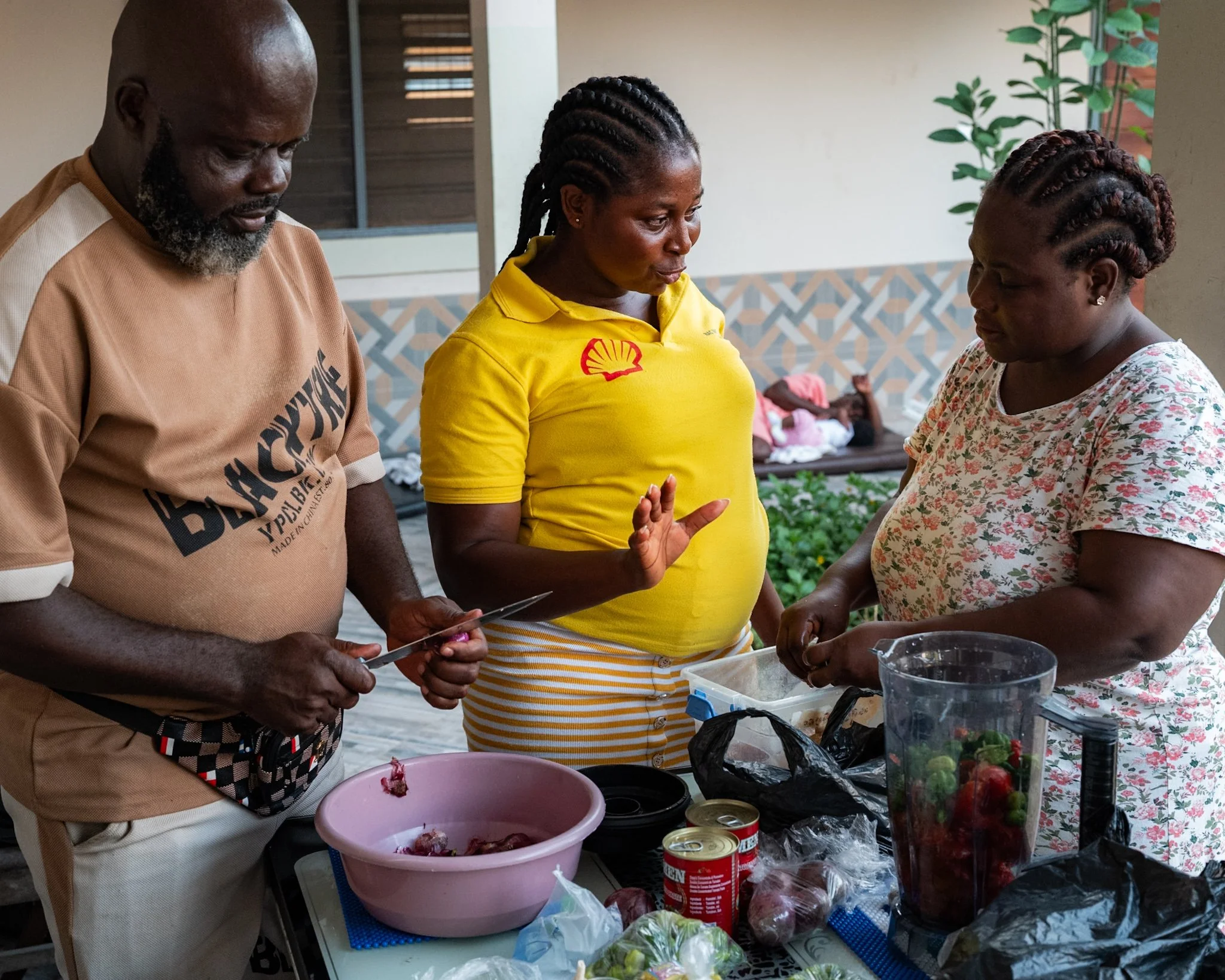
Members of the Tamakloe family who live in Accra prepare food together after returning home to Whuti during the festival period.
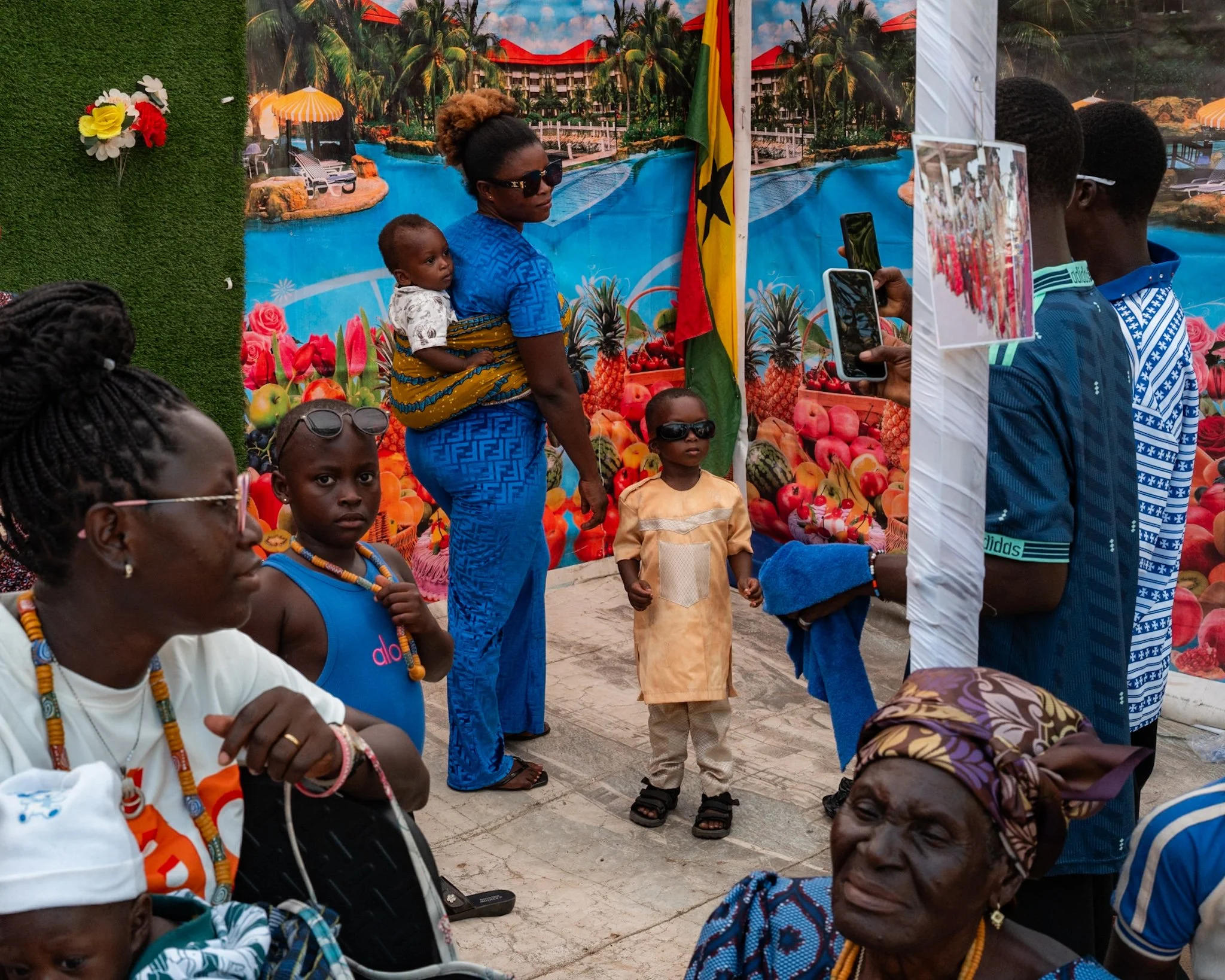
Members of a family in Anloga gather for a photograph during Hogbetsotso, the annual Anlo-Ewe festival commemorating the historic migration from Notsie in present-day Togo to settlements in present-day southeastern Ghana.
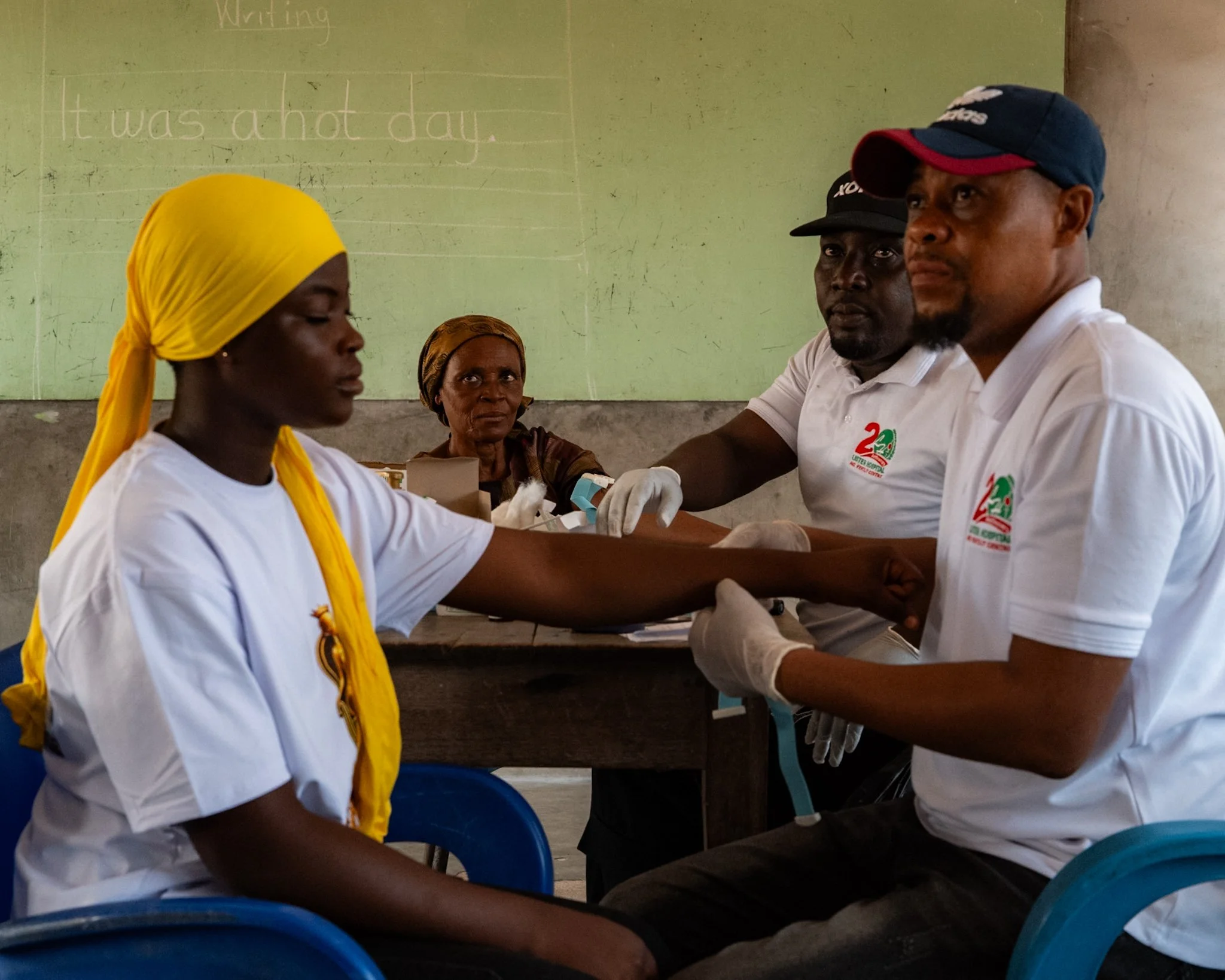
Medical workers provide free health services to residents in Whuti during activities surrounding Hogbetsotso, the annual Anlo-Ewe festival held in the area. Health programming during the festival period also includes a community health walk and preventive-care outreach.
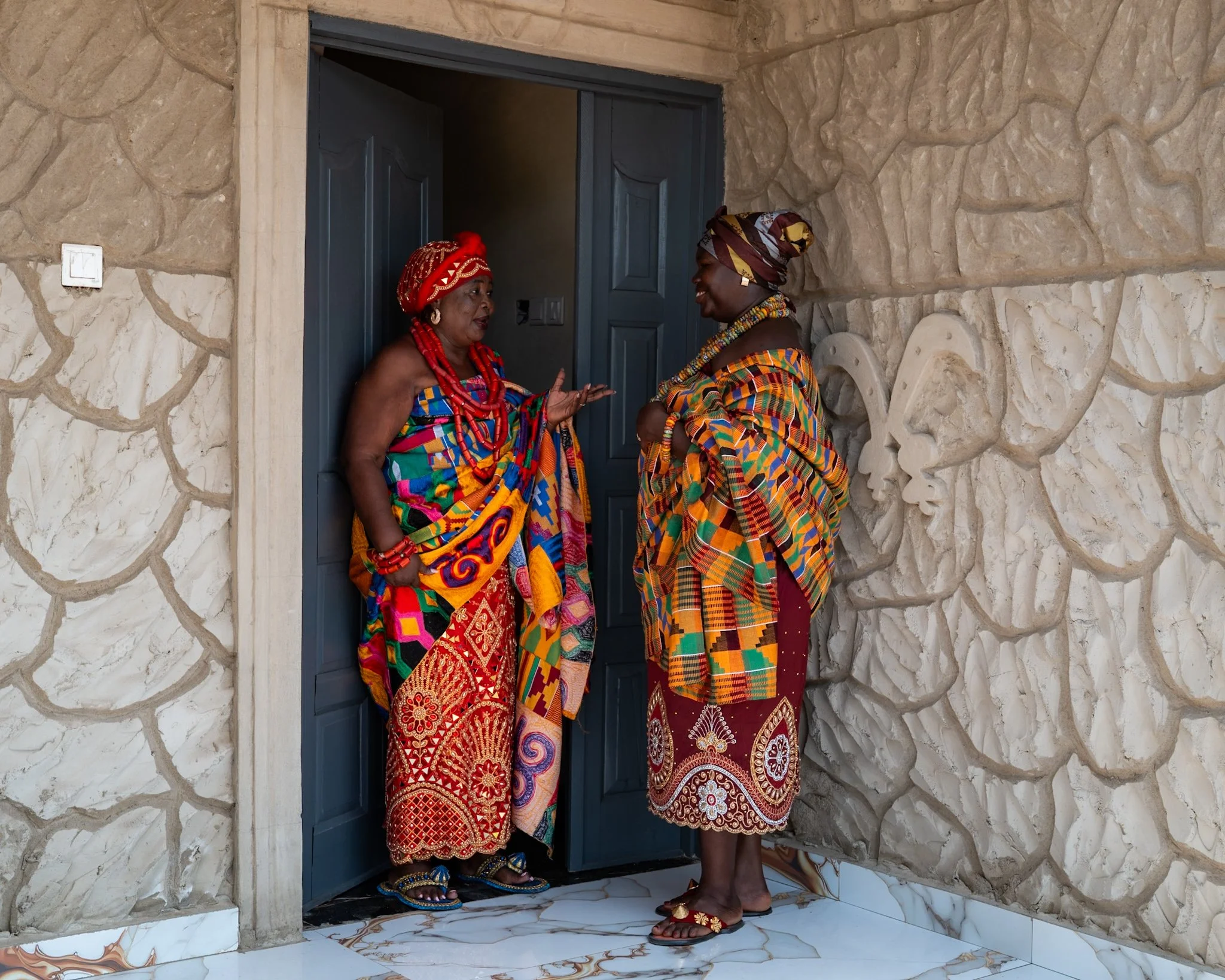
Mama Agumedzonu II, Nyonufia (Queen Mother) of Whuti, speaks with a friend at her home. Her visitor lives in Accra and is also from Whuti.
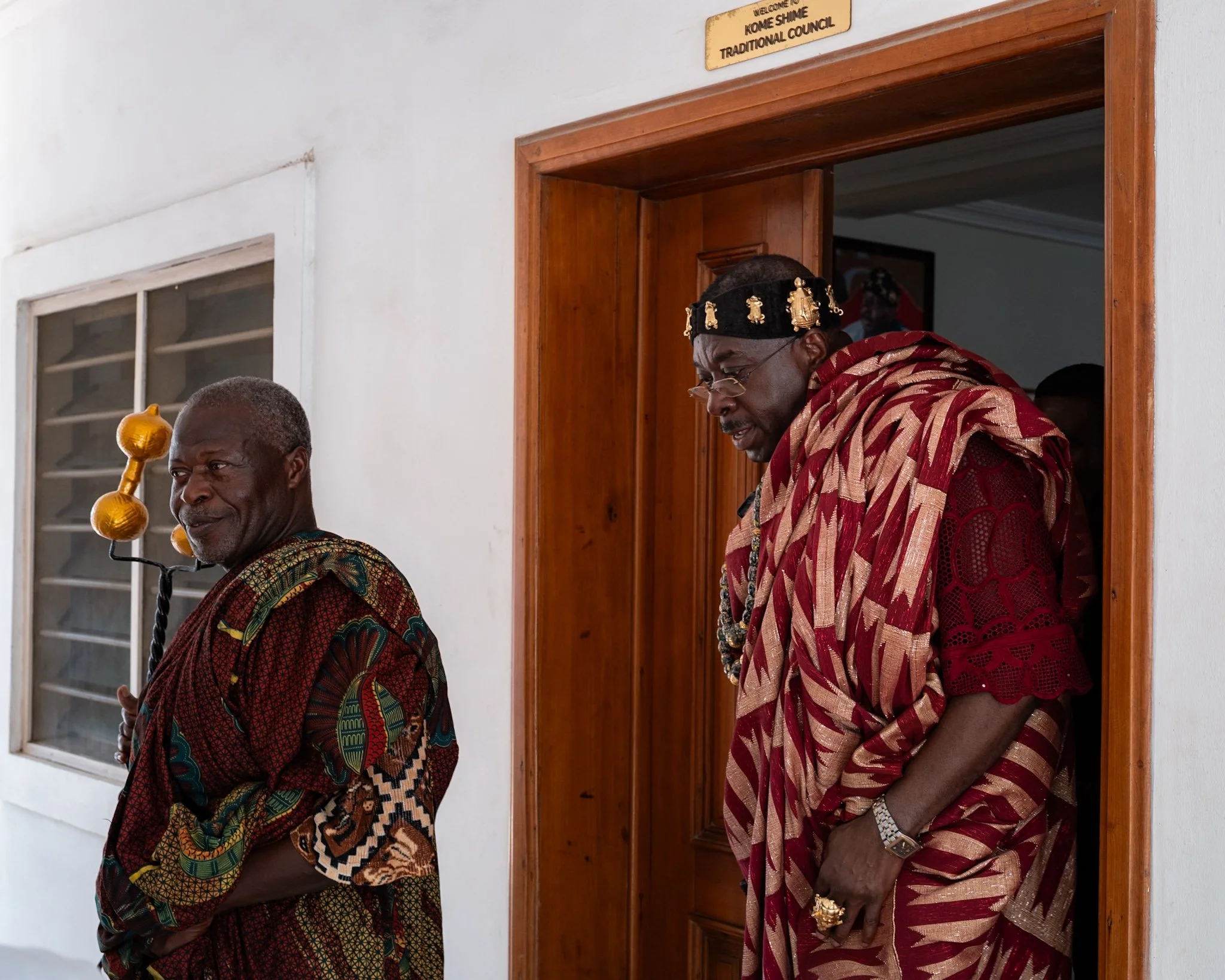
Togbi Nyaho Tamakloe VI, Miafiaga of Anlo, Paramount Chief and President of the Kome-Shime Traditional Council, Dufia of Whuti, and Head of the Royal Adzovia Clan, leaves the council in Whuti after conducting a naming ceremony for an American woman from the African diaspora.
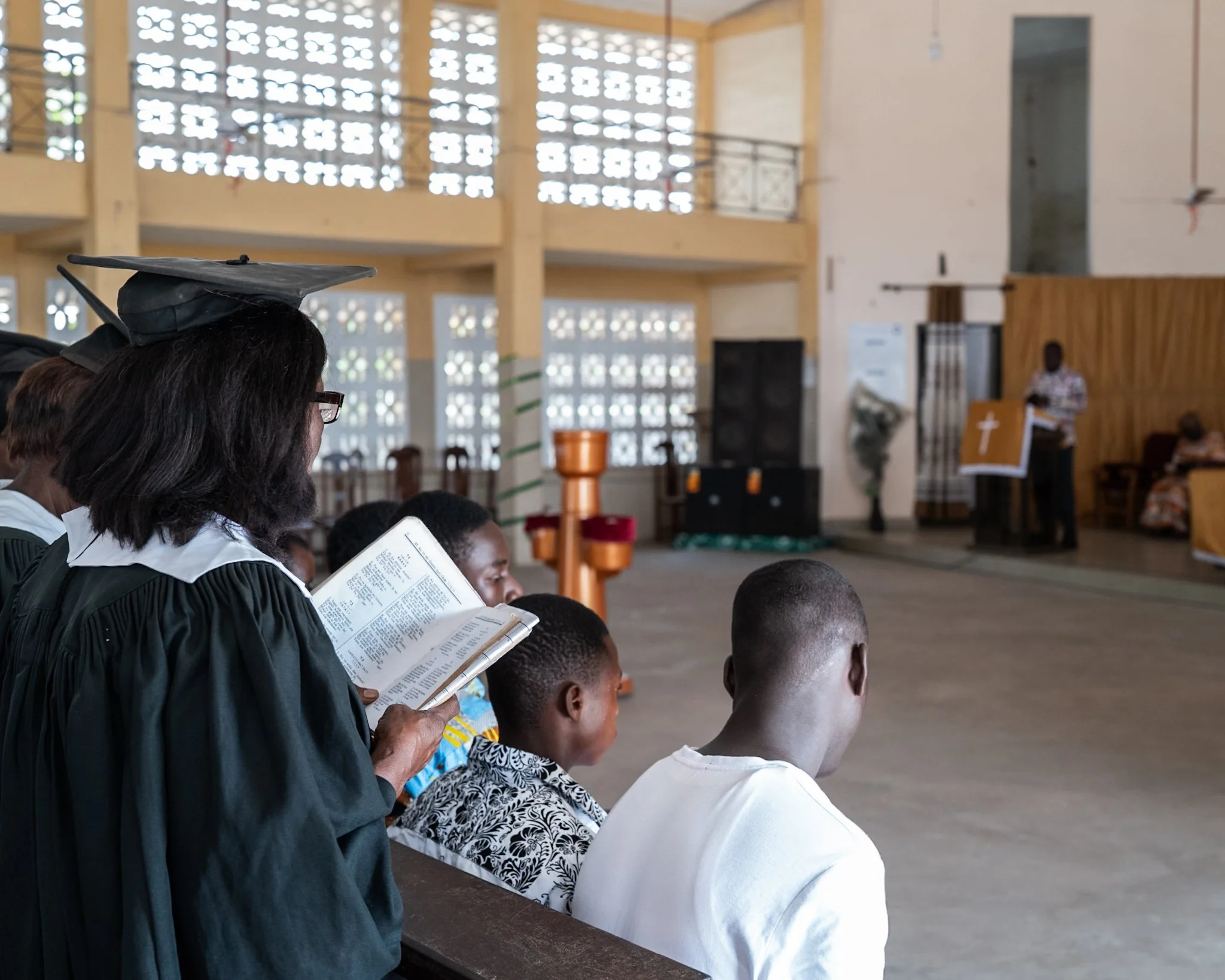
Members of the Whuti-Srogboe Evangelical Presbyterian Church worship at Mercy Chapel in Whuti. Christian worship forms part of contemporary community life alongside Ewe spiritual practice.
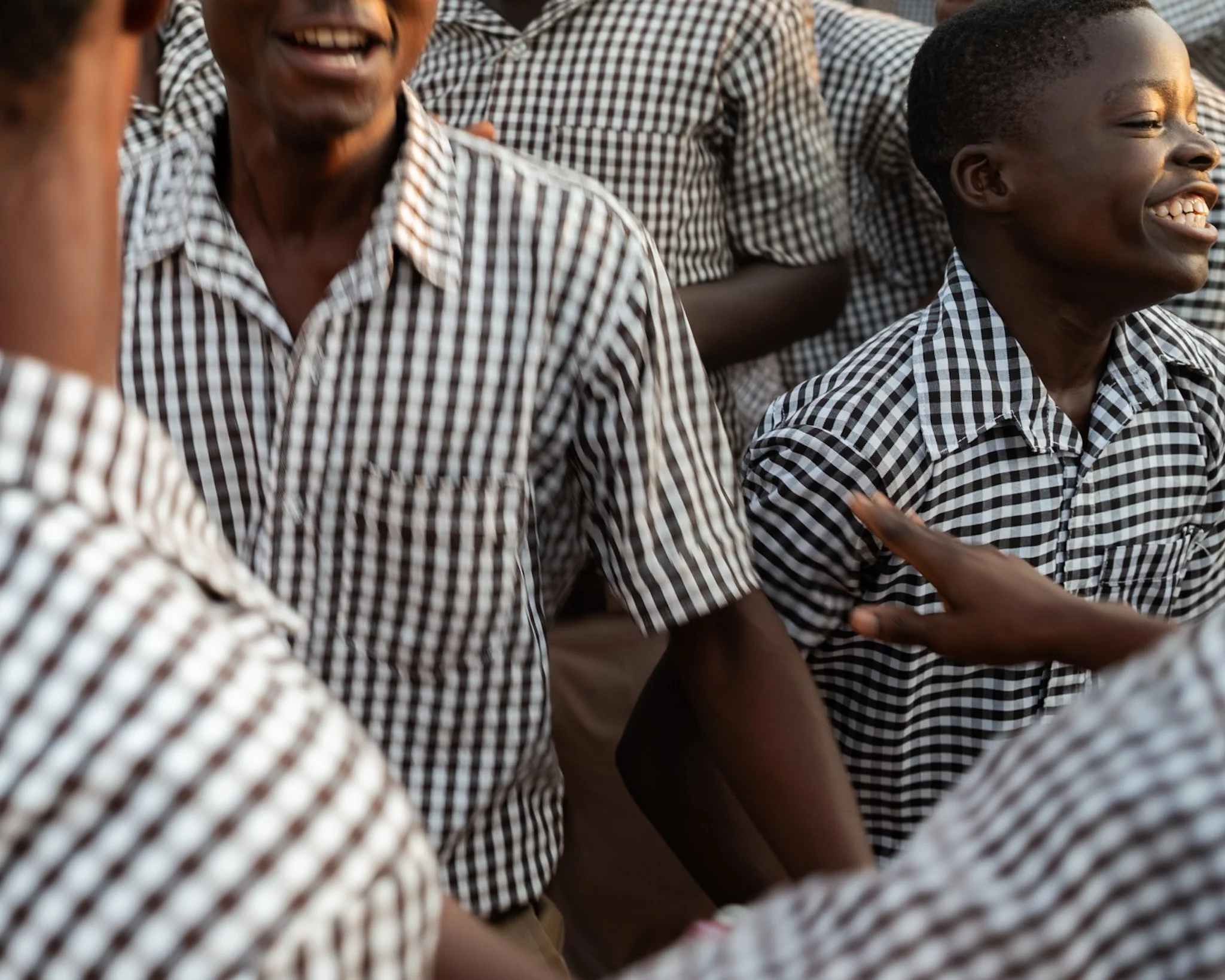
Students at Anlo Technical Institute dance to Christian music during the school’s 2026 Old Students’ Homecoming in Anloga.
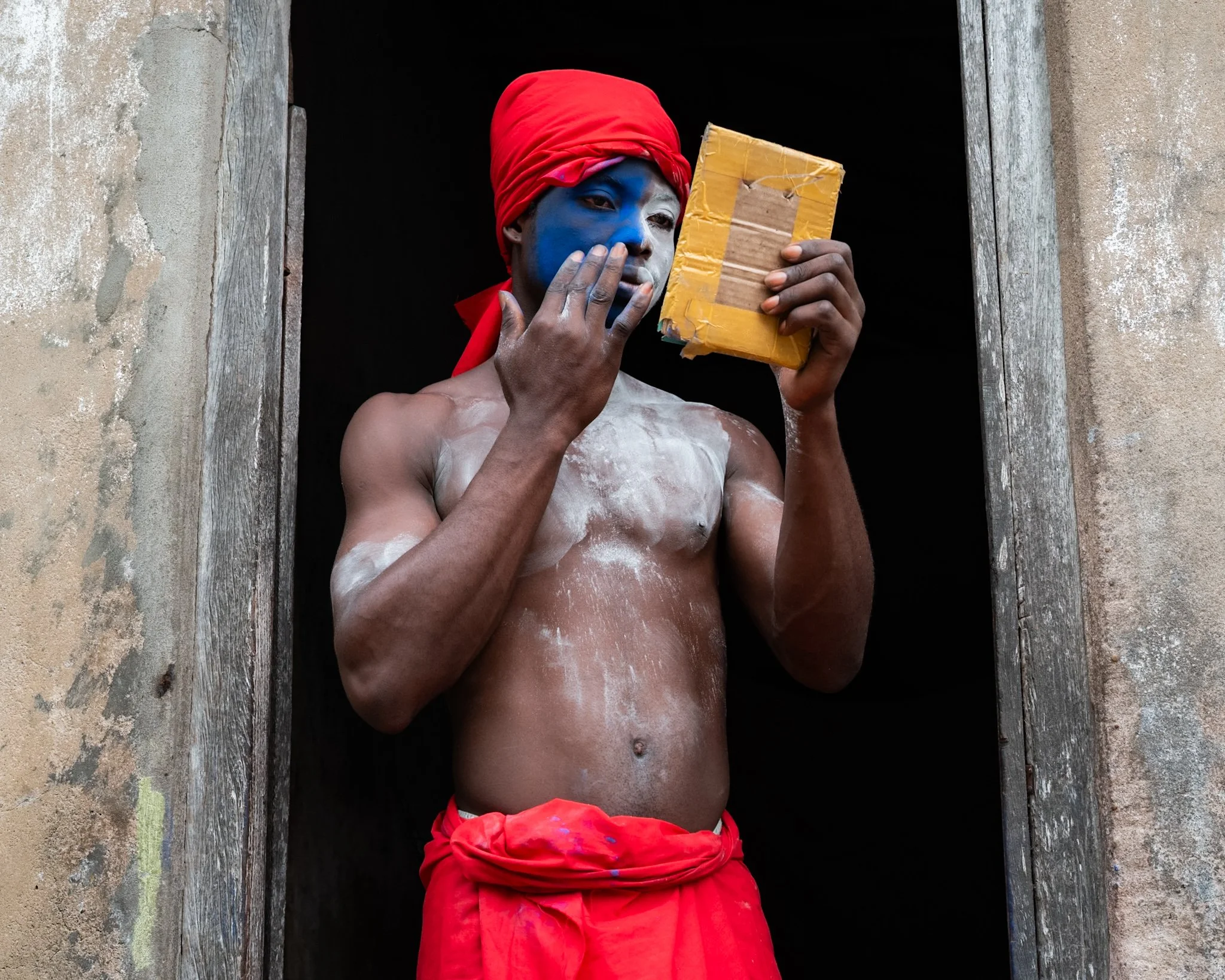
A young man applies blue and white body paint before Kakatoka, an annual Whuti ritual of cleansing and renewal intended to fortify the town and drive away harmful spirits.
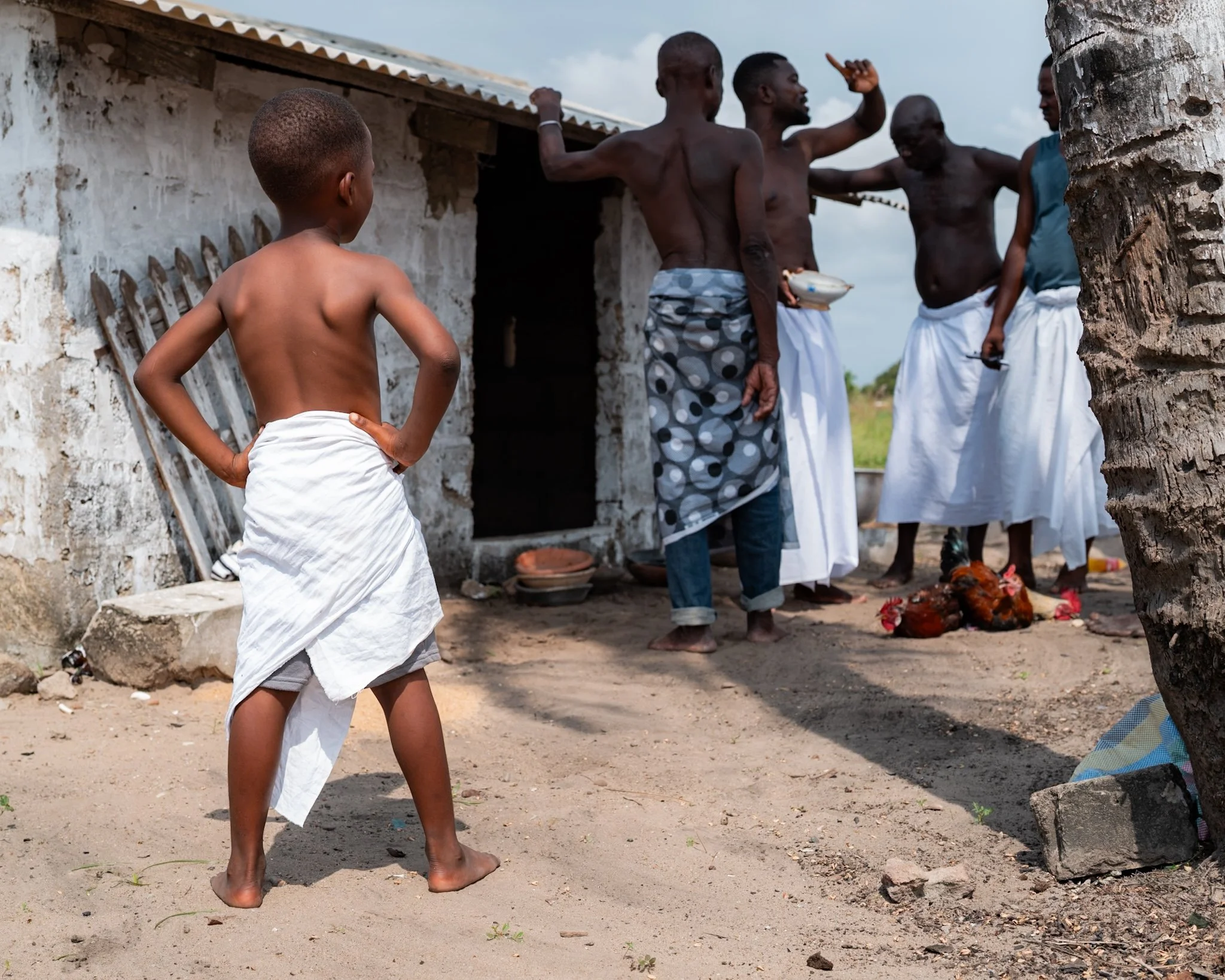
A young boy watches older men carry out Kakatoka rituals at an Ewe spiritual shrine on farmland in Whuti, where animals are sacrificed, food is prepared and offerings are presented.
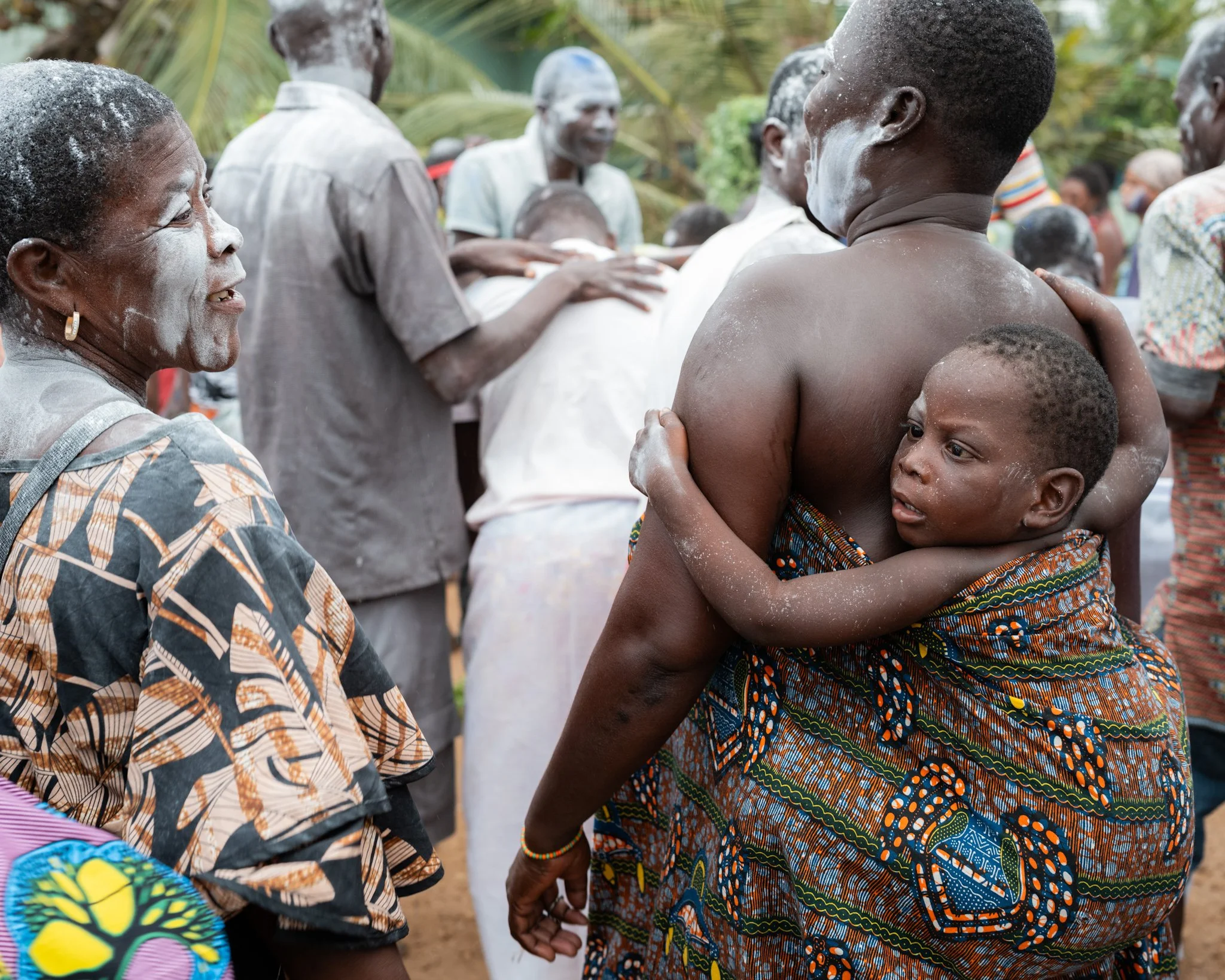
A child embraces their mother during Kakatoka, Whuti’s annual ritual of cleansing and renewal.
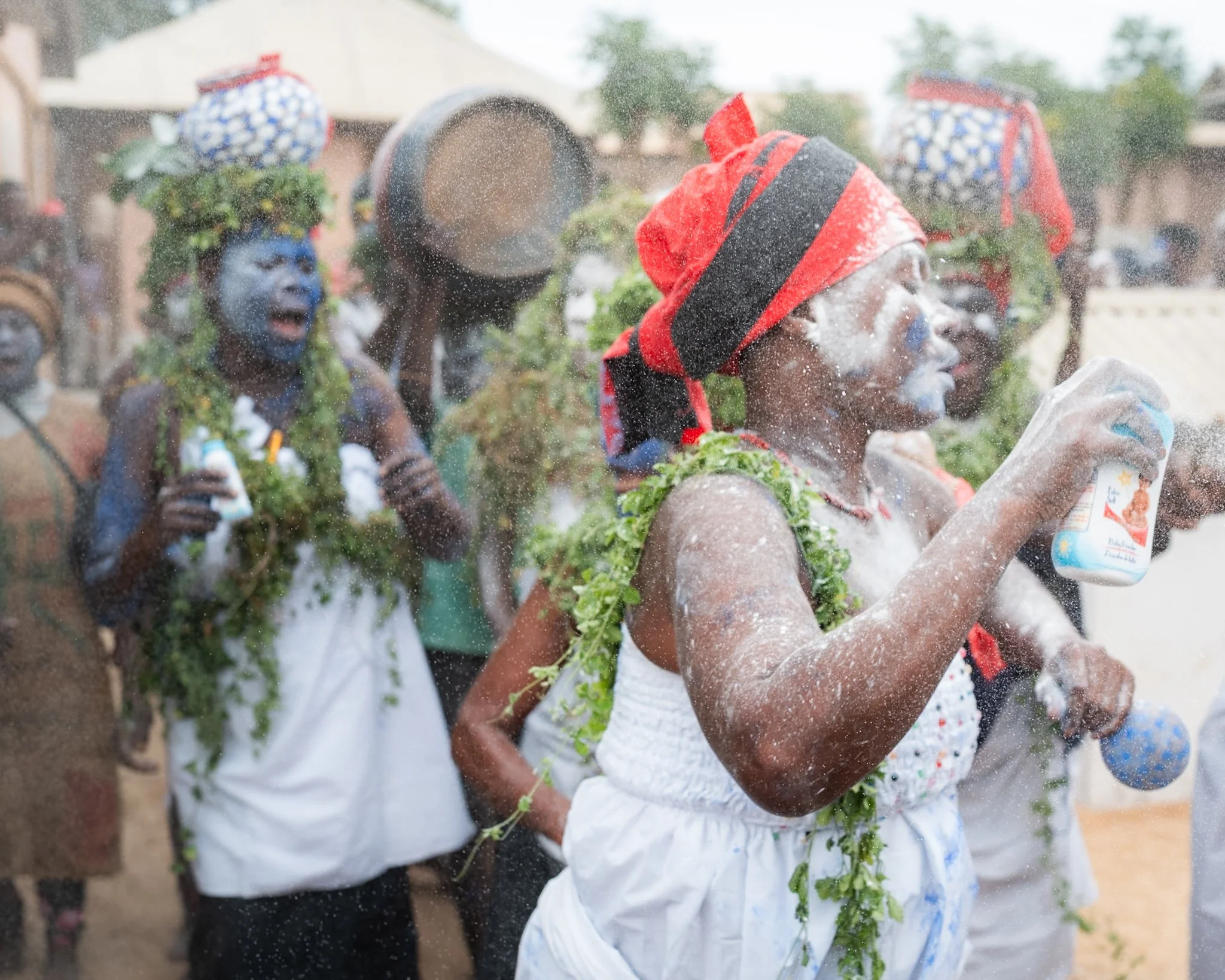
Participants move through Whuti during the Kakatoka procession, part of a ritual intended to cleanse and renew the community and drive away harmful spirits.
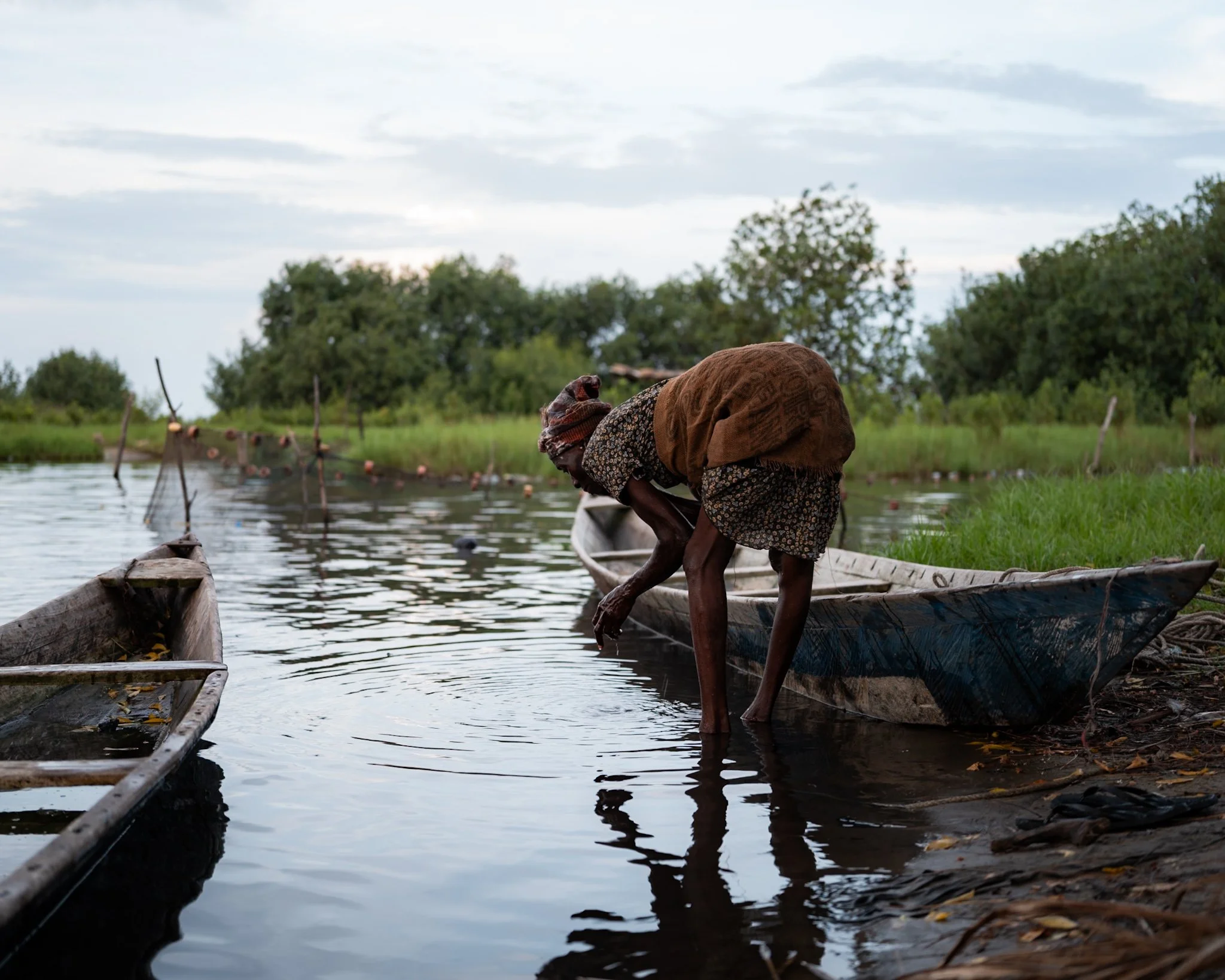
At the lagoon after the Kakatoka procession, participants wash their feet, hands, faces and hair to cleanse themselves of harmful spirits carried during the procession.
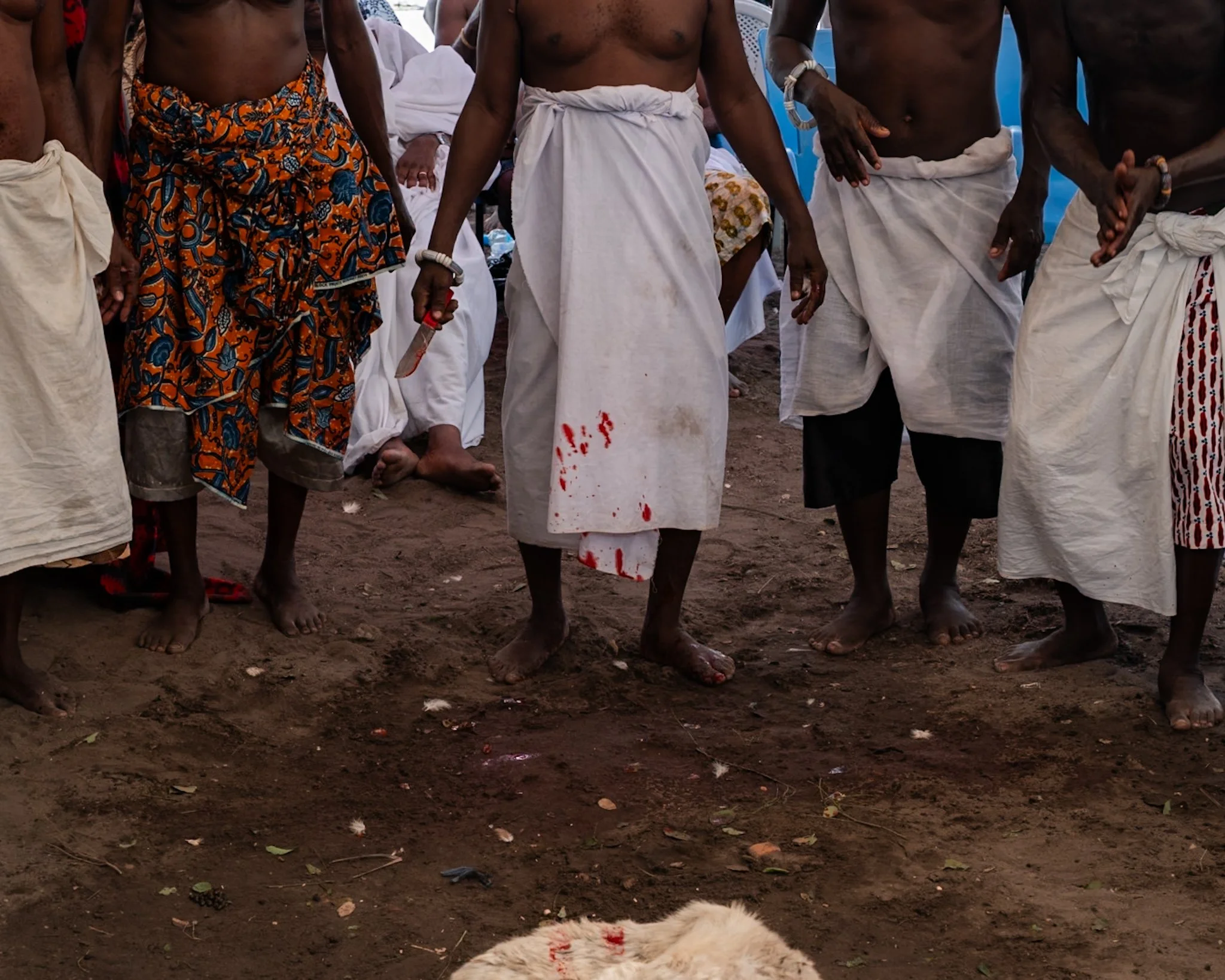
Men chant after a goat is sacrificed during Nugbidodo, the annual Anlo reconciliation rite held in Anloga ahead of Hogbetsotso.
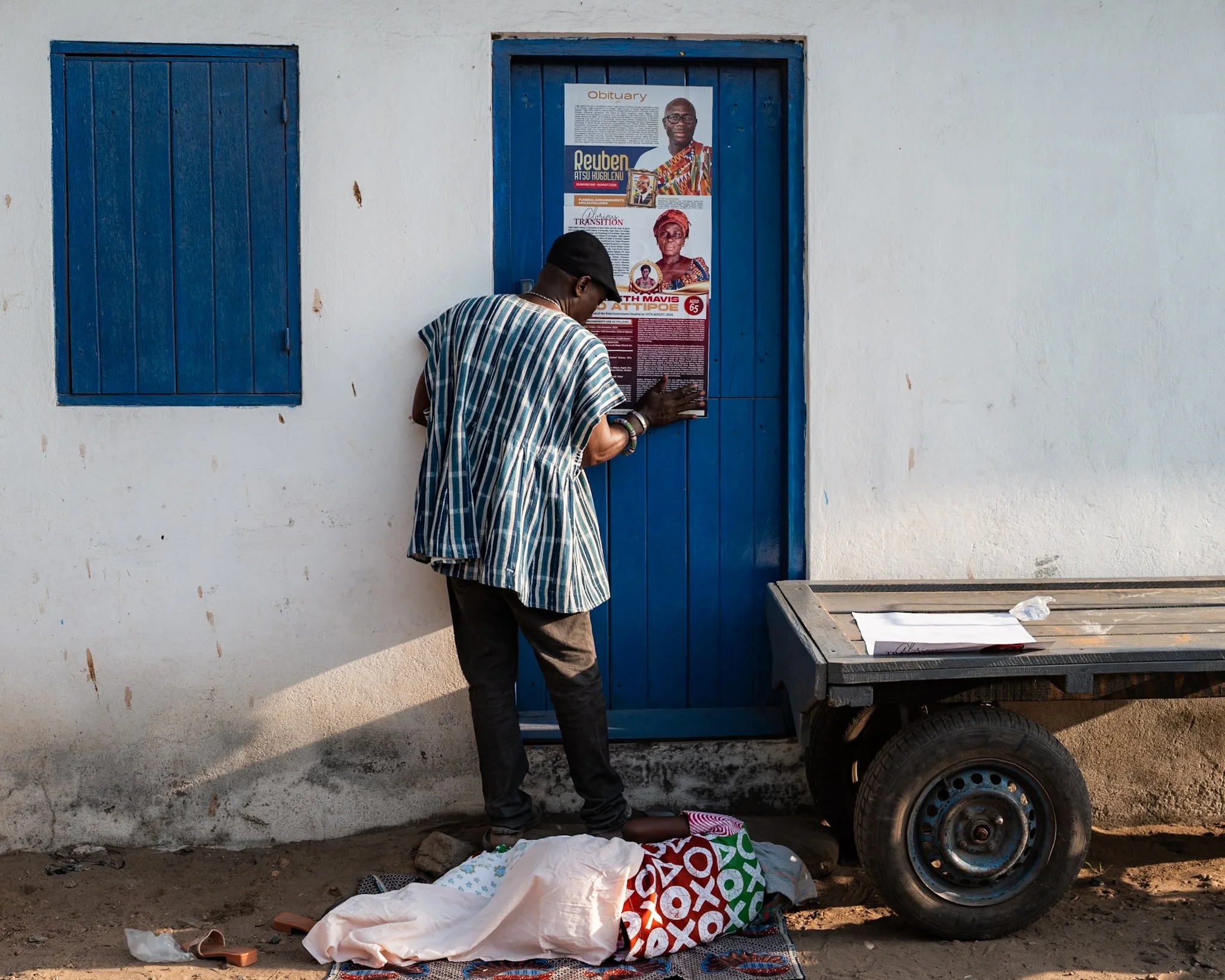
A man posts obituary notices in Anloga during Hogbetsotso. Traditional authorities restrict funeral rites during designated periods surrounding the festival.
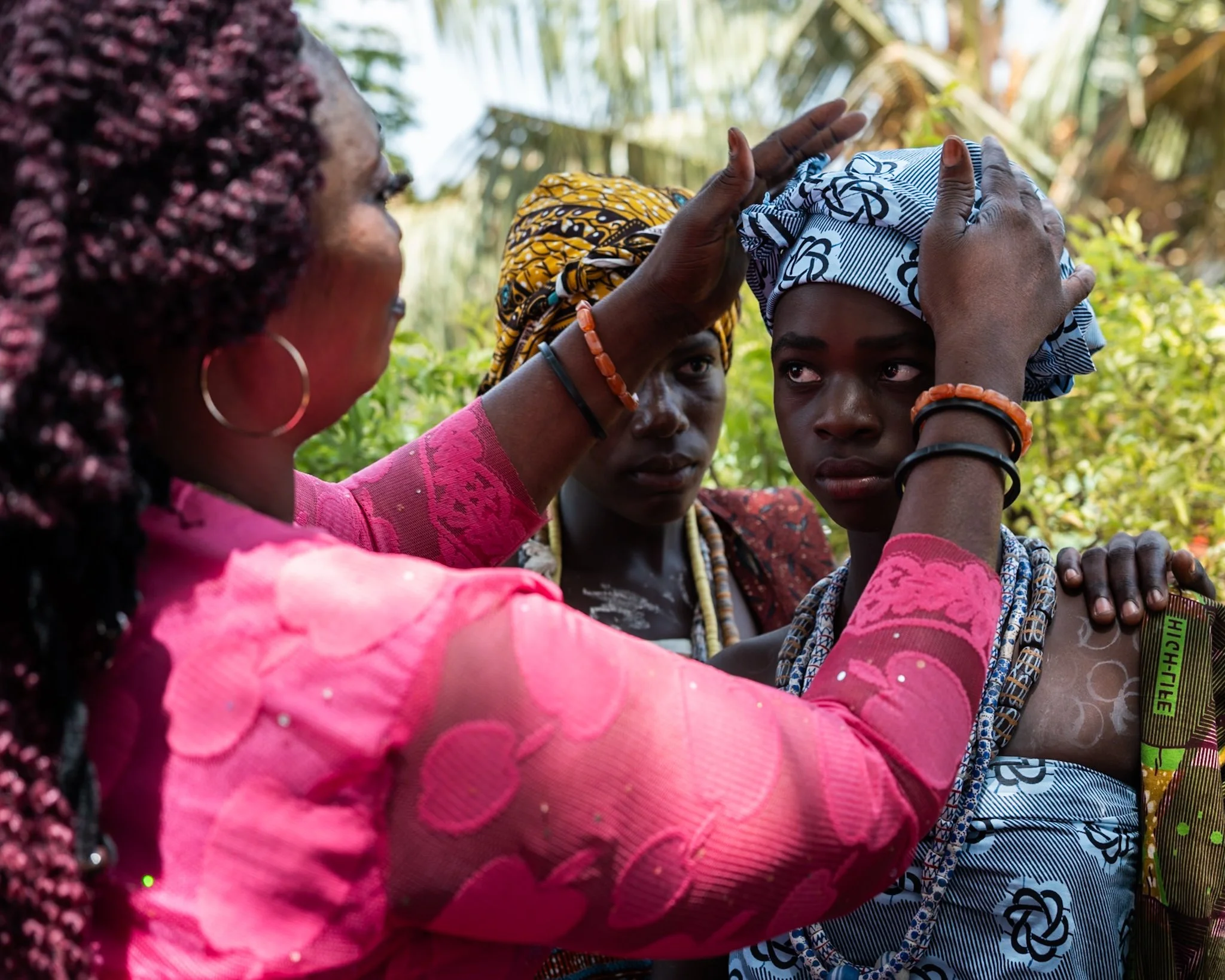
A woman adjusts a teenage performer’s headwrap before the Hogbetsotso Grand Durbar in Anloga.
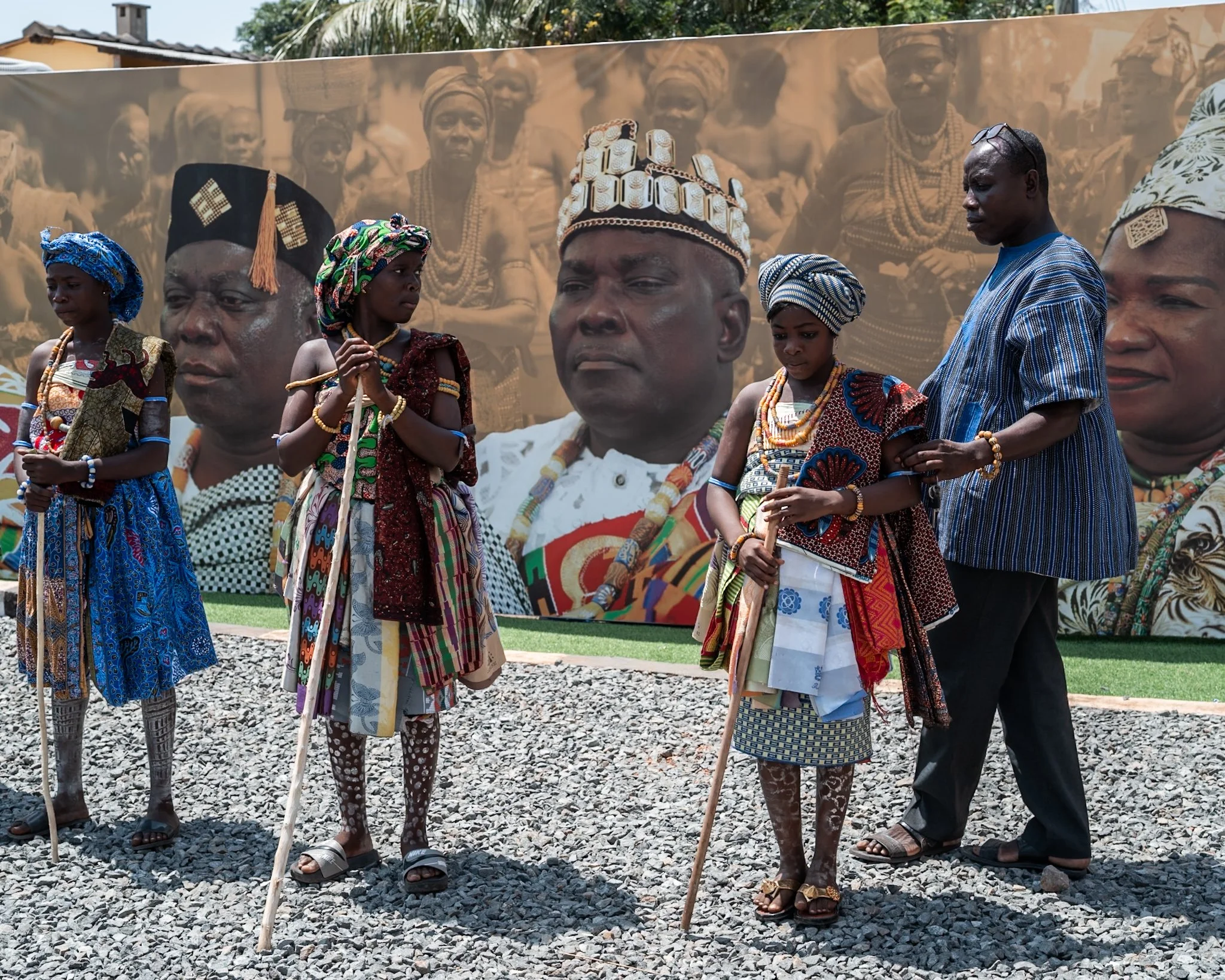
Teenage girls from Eastridge Junior High School wait with their headmaster, Charles, before performing during the ceremonial arrival of the Awoamefia, the traditional ruler and spiritual head of Anlo, and other paramount chiefs at the Hogbetsotso Grand Durbar in Anloga.
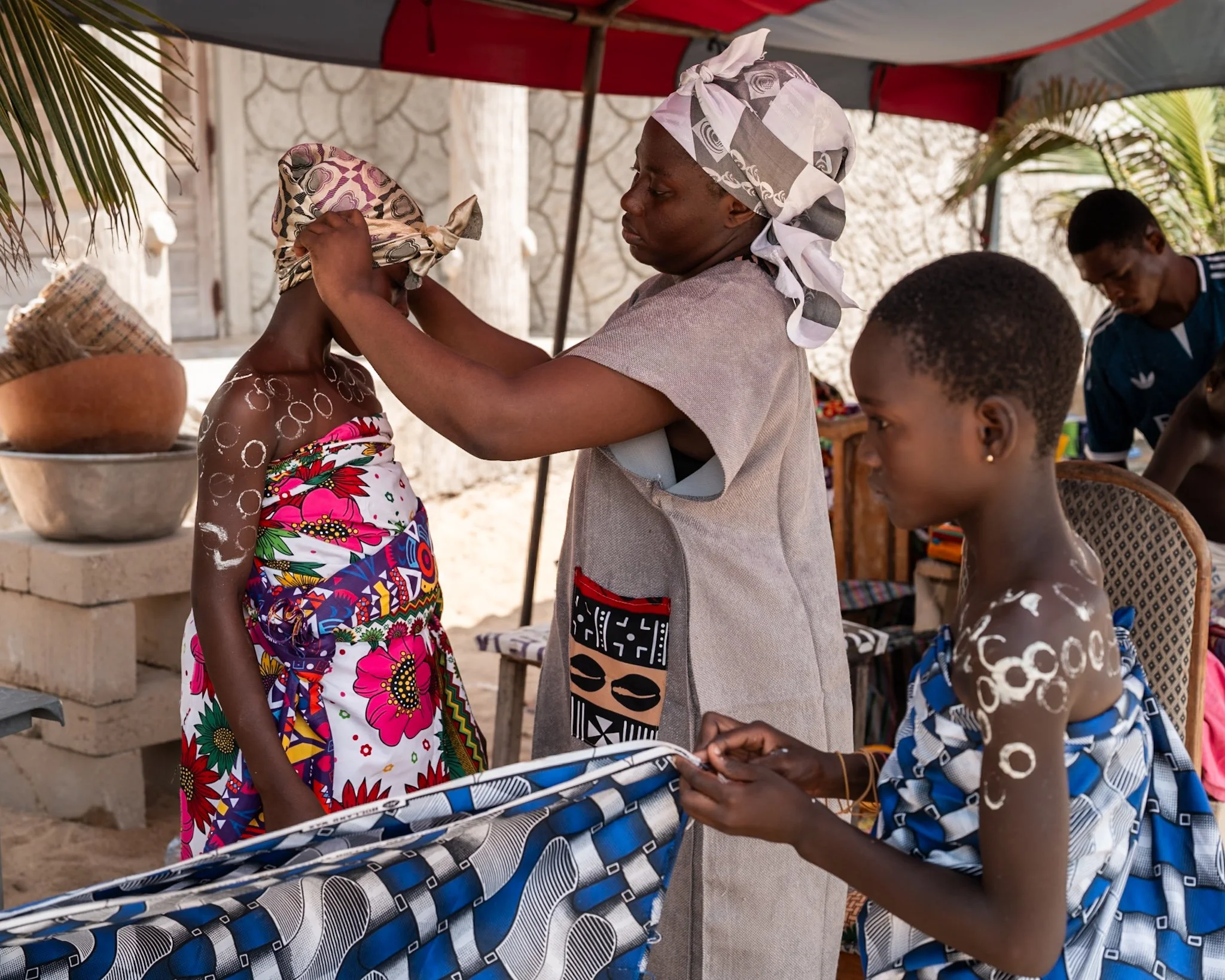
Jecintha, daughter of Mama Agumedzonu II, Nyonufia (Queen Mother) of Whuti, and a laboratory technician, dresses children she helped gather from the community before Whuti’s Tɔtrɔyeyeza Grand Durbar, part of the town’s Diaspora Festival. She described this work as part of her responsibility to carry the community’s cultural identity forward.
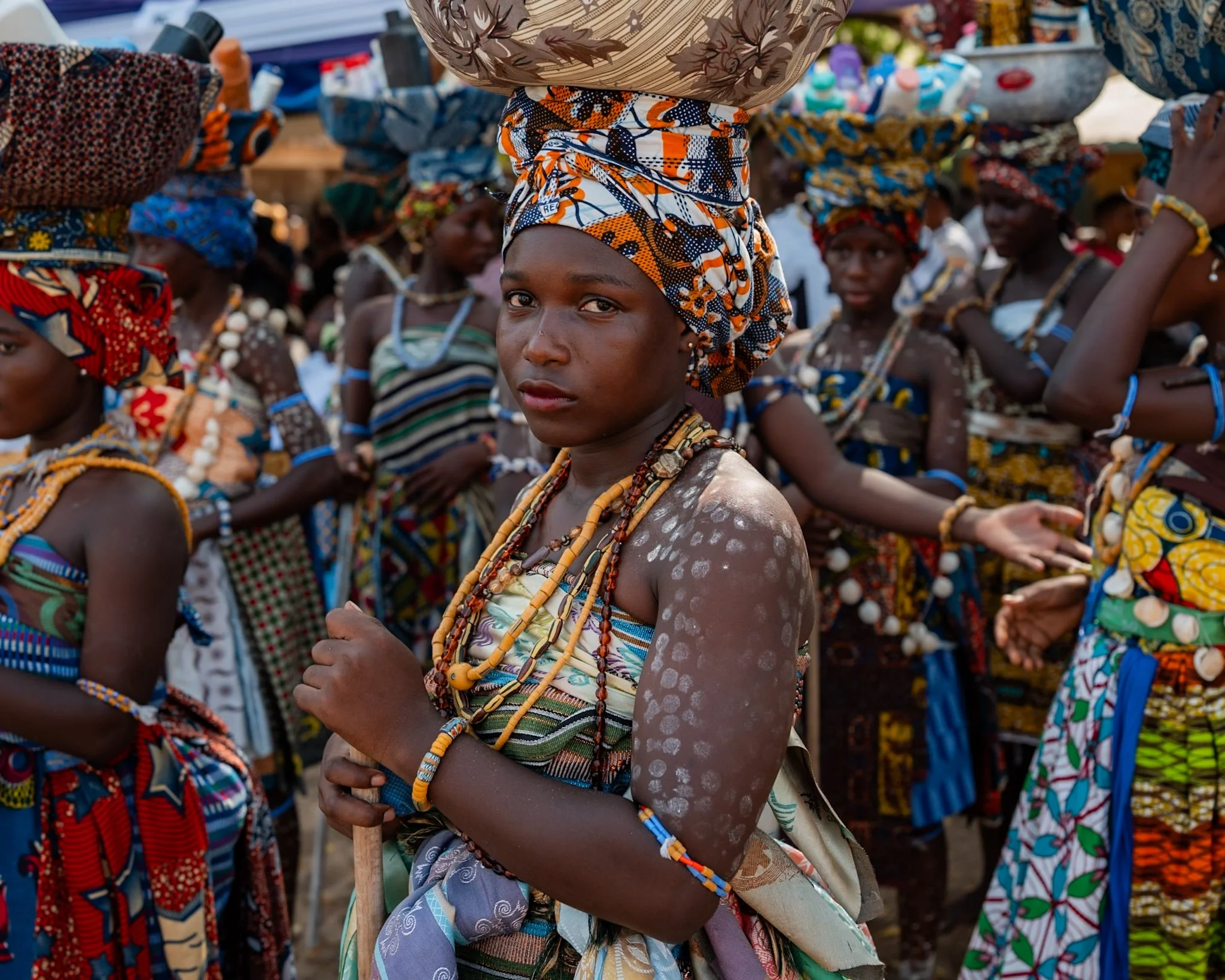
A teenage performer waits among other young participants at Whuti’s Tɔtrɔyeyeza Grand Durbar, part of the town’s Diaspora Festival.
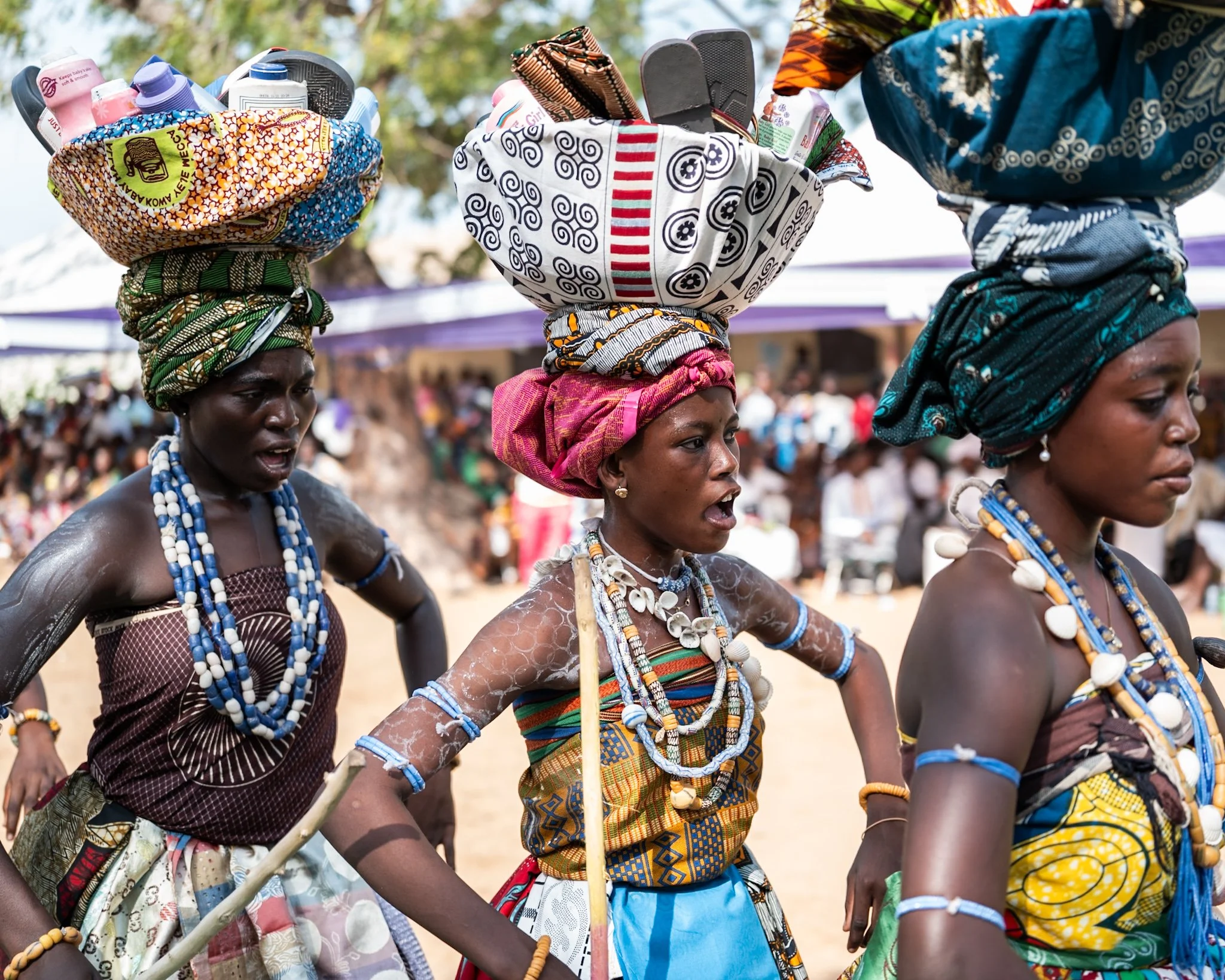
Teenage girls from Eastridge Junior High School perform at Whuti’s Tɔtrɔyeyeza Grand Durbar, the day after performing at Hogbetsotso in Anloga, which commemorates the historic migration of the Anlo-Ewe from Notsie in present-day Togo to settlements in present-day southeastern Ghana. The performers said their participation was intended to honor their ancestors.
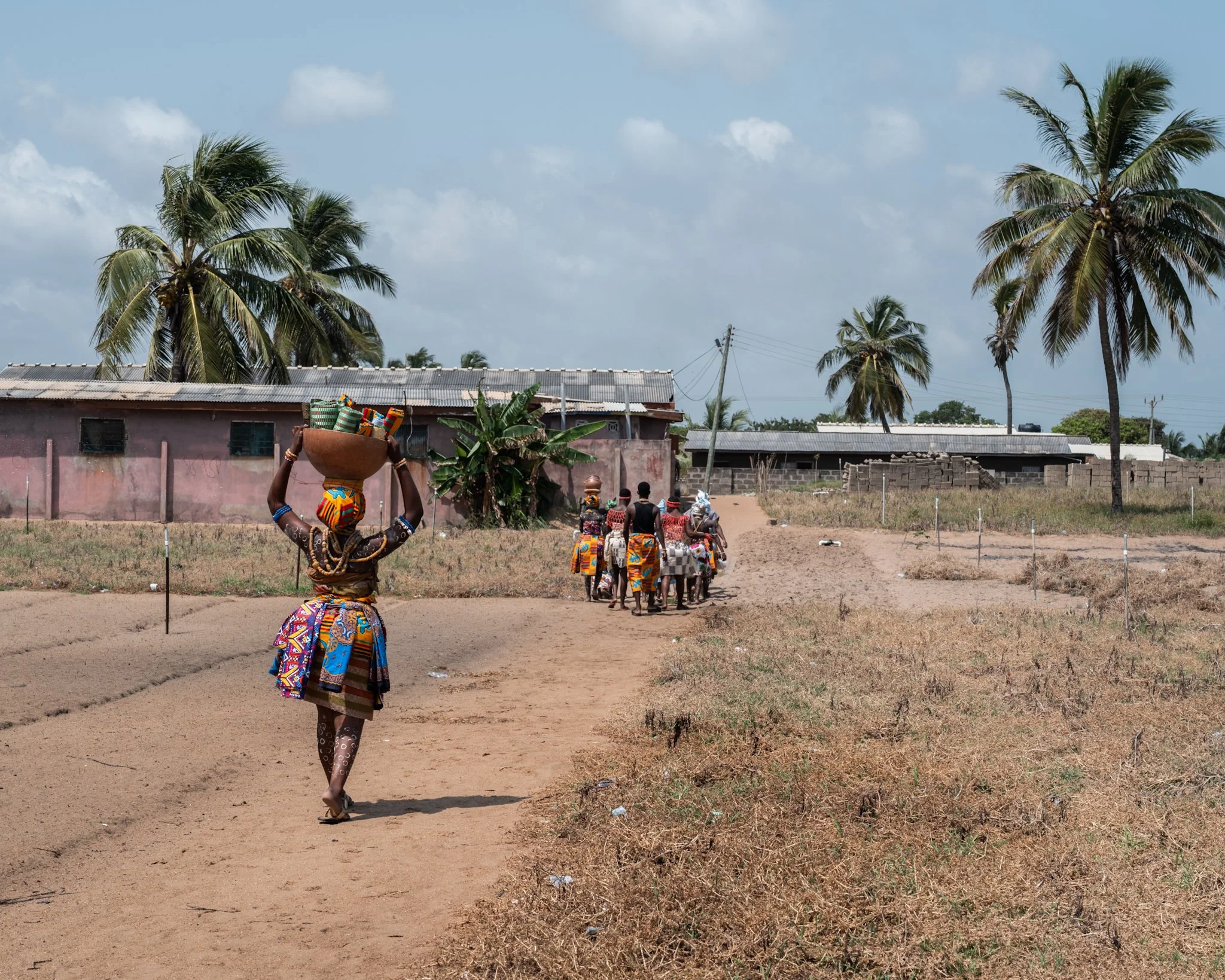
Young performers from Whuti walk from the Queen Mother’s home to the Tɔtrɔyeyeza Grand Durbar after being gathered, prepared and organized by her daughter for a surprise performance for Togbi Nyaho Tamakloe VI, Paramount Chief and President of the Kome-Shime Traditional Council.