Bring in All Rastas, Dead or Alive! is a documentary portrait and testimony project by Janick Gilpin preserving Rastafari memory, self-definition, and livity in Jamaica through formal portraits, Jamaican Patois audio testimony, and archival research. Begun in 2023, the work brings together elders and younger Rastafari to trace how Rastafari has been feared, punished, embraced, misunderstood, and carried forward across generations.
Through formal portraiture and recorded audio testimonies in Jamaican Patois, the project asks how histories of stigma, state repression, school and workplace exclusion, and the forced cutting of dreadlocks continue to shape Rastafari life today. The work began after a family conversation in Jamaica, when a relative casually used the words “dirty Rasta” while recalling the past.
I am not Rastafari, but I was raised in Jamaica with the pressure attached to dreadlocks; as a teenager I wanted locs, but was told I could not live at home if I grew them. Some of the people photographed are from the community where I was raised, while others live elsewhere across Jamaica. That proximity gave the work a personal point of entry, but also a responsibility: to approach the project through testimony, consent, and self-definition rather than outside description.
The title draws from a directive widely attributed to Prime Minister Alexander Bustamante during the 1963 Coral Gardens crackdown: “Bring in all Rastas, dead or alive.” Elder testimony remains the historical spine of the project, while younger Rastafari show how that history continues through school, labor, care, faith, family, and public life. Together, the photographs and voices preserve how Rastafari define themselves beyond the narratives imposed on them.
Process note: Portraits and testimonies were recorded across repeated visits. Testimonies were recorded in Jamaican Patois; excerpts shown here are translated and lightly edited for clarity.
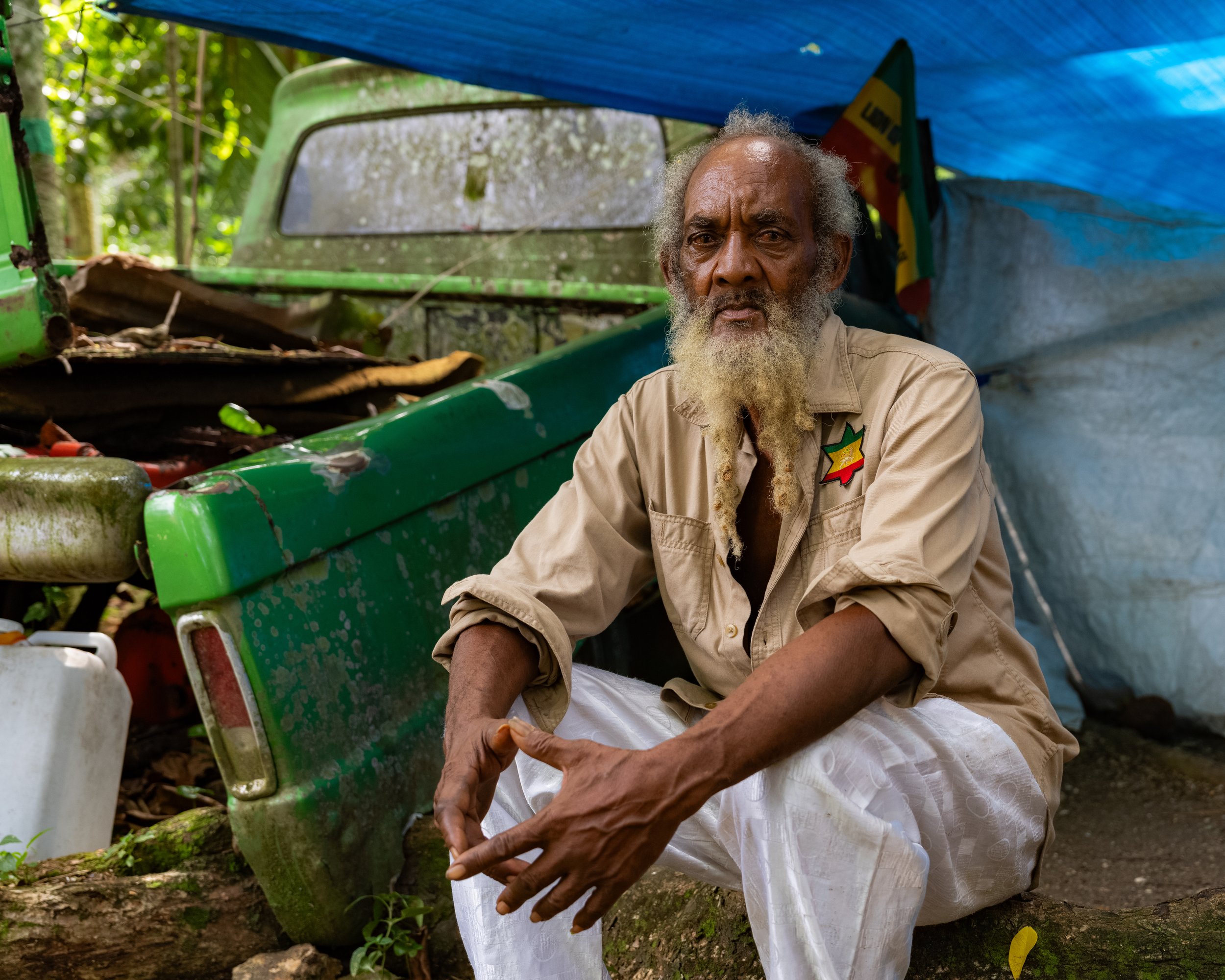
Verald “Ras Iyah V.” Vassell (73), 1st-generation Rastafari, Chairman, Rastafari Nyabinghi Administrative Council. Jamaica, 2023.
“Marijuana was used as an avenue to harass and brutalize Rastafari. For example, if the police knew the Nyabinghi was taking place here for Rastafari to assemble and engage in worship, they would have roadblocks because they know Rastafari are coming and always have marijuana on them. We knew it was highly discriminatory, used to uphold colonialism and the suppression of the activities of our people towards liberation. It was terrible, and some things were unbelievable. As I remember, the police approached the Nyabinghi, tied Rastafari dreadlocks to their jeep, and pulled them on the road. Vicious things.”

Wesley “Ras Peaky” Brown (82), 1st-generation Rastafari, Survivor of the 1963 Coral Gardens Incident. Jamaica, 2024 (died 2025).
“The Prime Minister came down and said, ‘Lock them up, bring them in, dead or alive! What the jail cannot hold, the cemetery will hold.’ They battered us. Some bled all over. Then they hosed us down. It was one of the most disgraceful experiences I ever had. Some of my bredrens were elderly and didn’t live long afterward.”
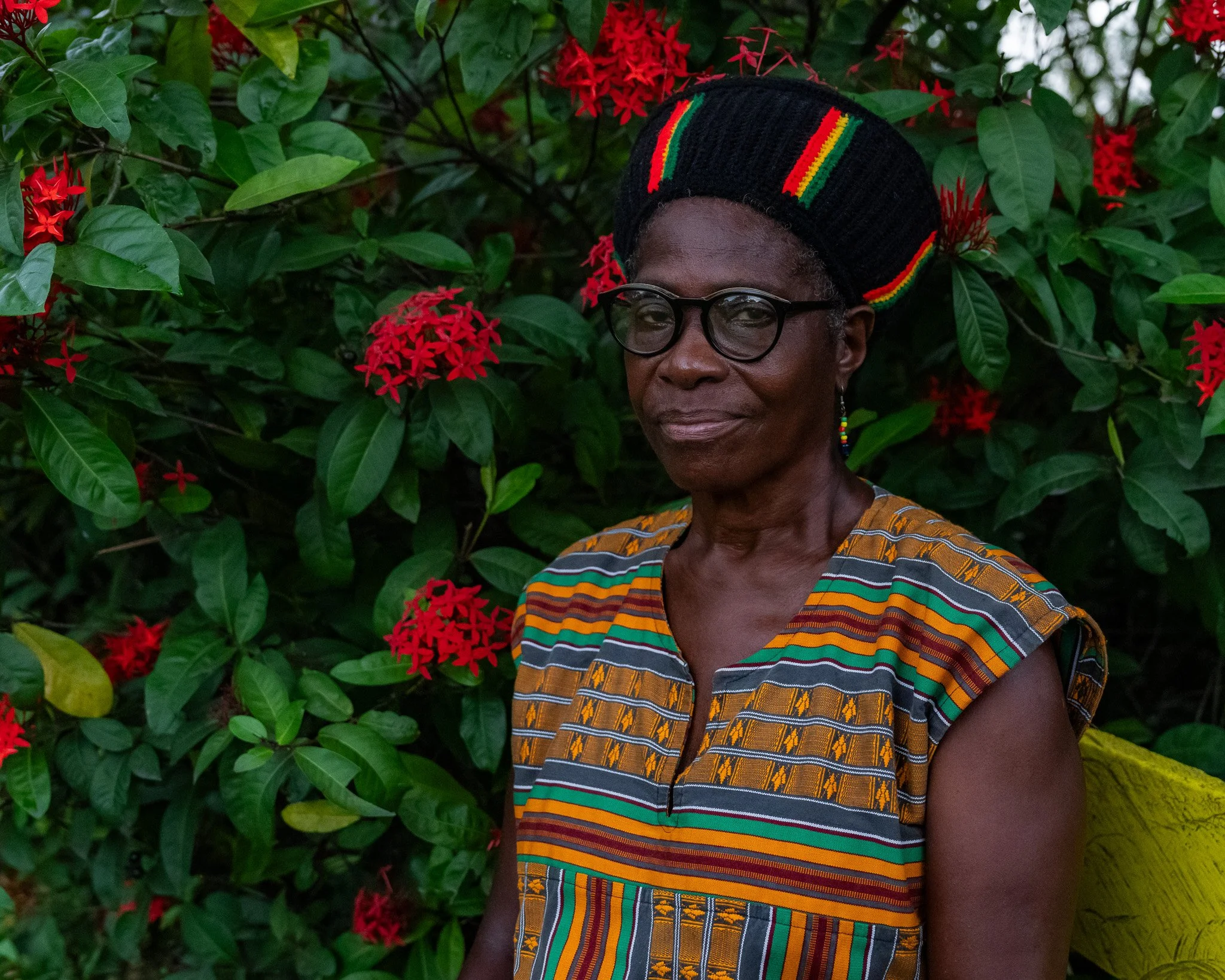
Pamela “Sistah Nanny” Rowe-Williams (70), 1st-generation Rastafari, Secretary, Rastafari Coral Gardens Benevolent Society. Jamaica, 2023.
“Students going to school are questioned about their dreadlocks, and some principals turn them away. If they wear a Rasta cap, principals want to know what is under it, and if they do not, principals are offended by their Afrocentric look. Every academic year, parents ask us to write letters because some schools demand proof from a Rastafari organization that a student is Rastafari. No other religion or race is treated in this manner in Jamaica.”
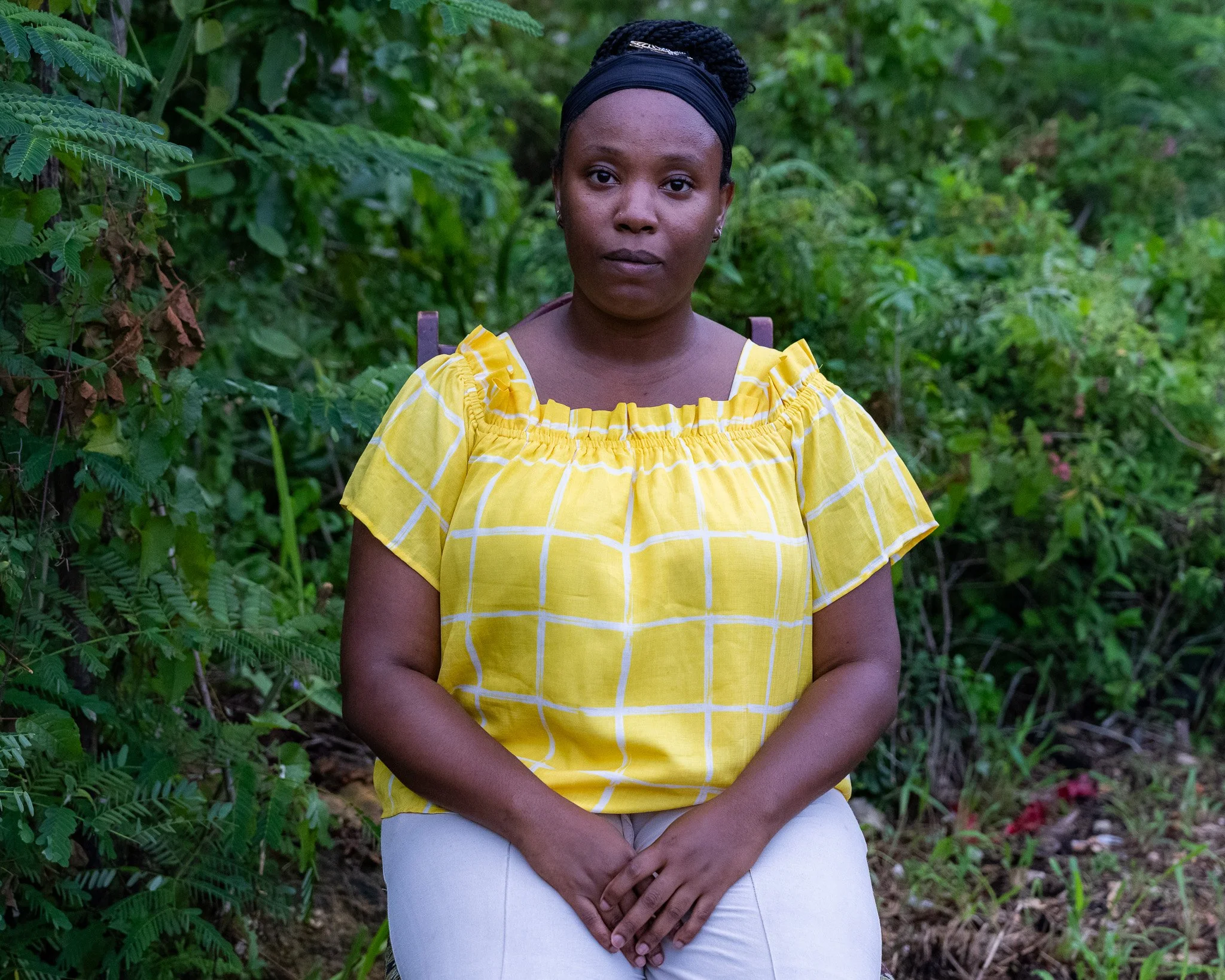
Rashada Azania Elliott (23), 2nd-generation Rastafari, nurse at a Rastafari elder-care center and daughter of David “Ras IGIE” Elliott. Jamaica, 2026.
“I’ve been teased since primary school, all the way through college. It was always the same thing. They would question my cleanliness. Other kids would cut off my locks, show them to me, and laugh. I was bullied a lot. My dad has been a Rasta his whole life. My mom was too, but she cut her locks because of the bullying.”
David “Ras IGIE” Elliott (70), 1st-generation Rastafari, holistic healer and artisan. Jamaica, 2025.
“Mothers, fathers, brothers, sisters discriminated against us. Nobody liked us or our Rastafari way of life. They considered us worthless. It’s like we were cursed and, as a result, experienced many rejections. The police and state brutalized us, and we had to accept it versus going to jail and being sentenced for ganja. It was total disrespect and discrimination. We had no trade, no work, and not even taxis would pick us up. We had to create opportunities to survive.”
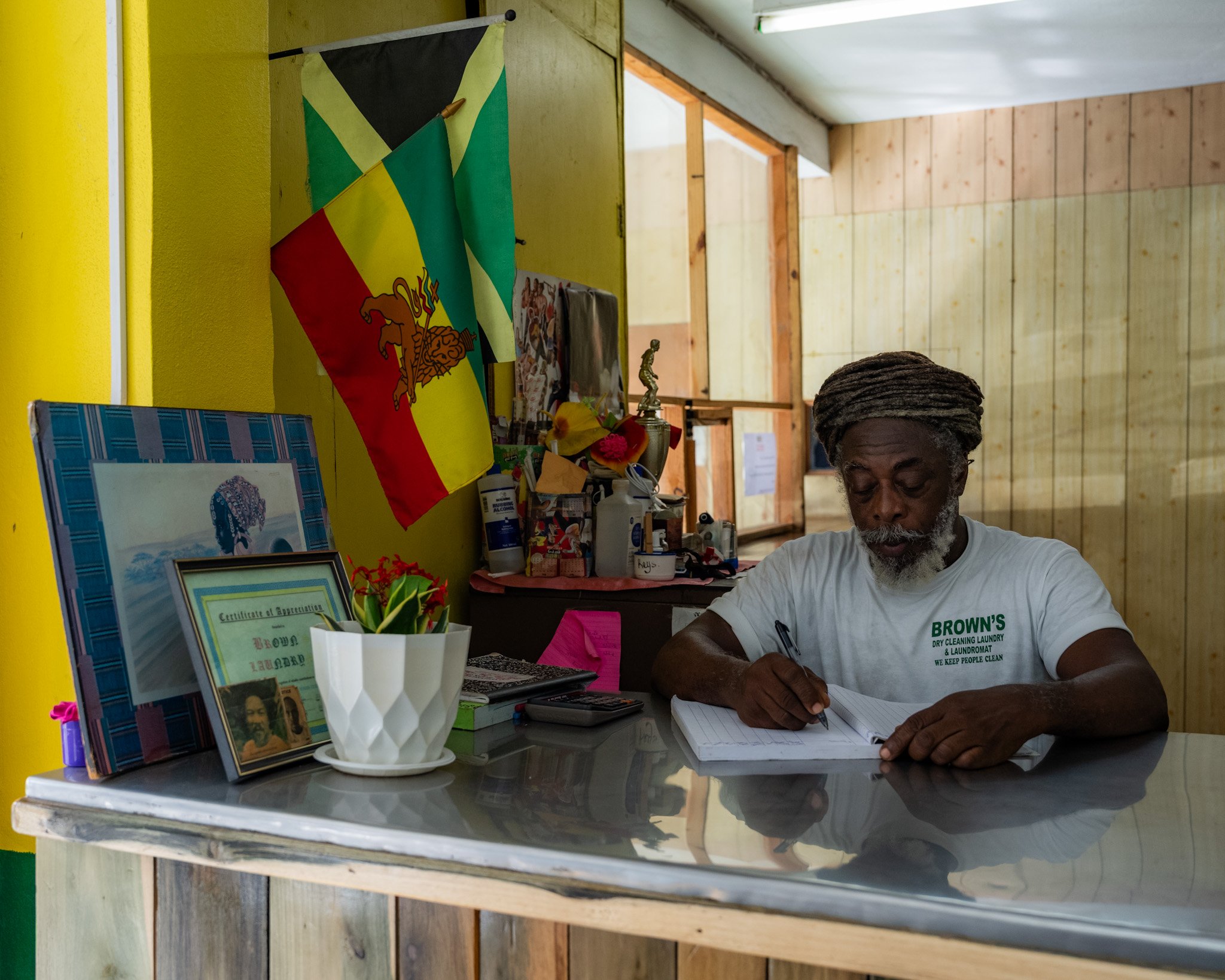
Lewis “Ras Brown” Brown (65), 1st-generation Rastafari, business owner (laundromat and dry cleaning), Treasurer, Rastafari Coral Gardens Benevolent Society. Jamaica, 2023.
“Black people’s hair is despised, and this concept is still a stigma. The situation is much better, but it needs to go away. And it can if the government sets up the right policies so Rastafari with dreadlocks can go to work without issues. Jamaica is where the religion Rastafari originated and is growing worldwide. So, in Jamaica, it should be recognized. The music is also worldwide. It’s not just the love and peace we are spreading. The government needs to understand that they should be doing more for the Rastafari community.”
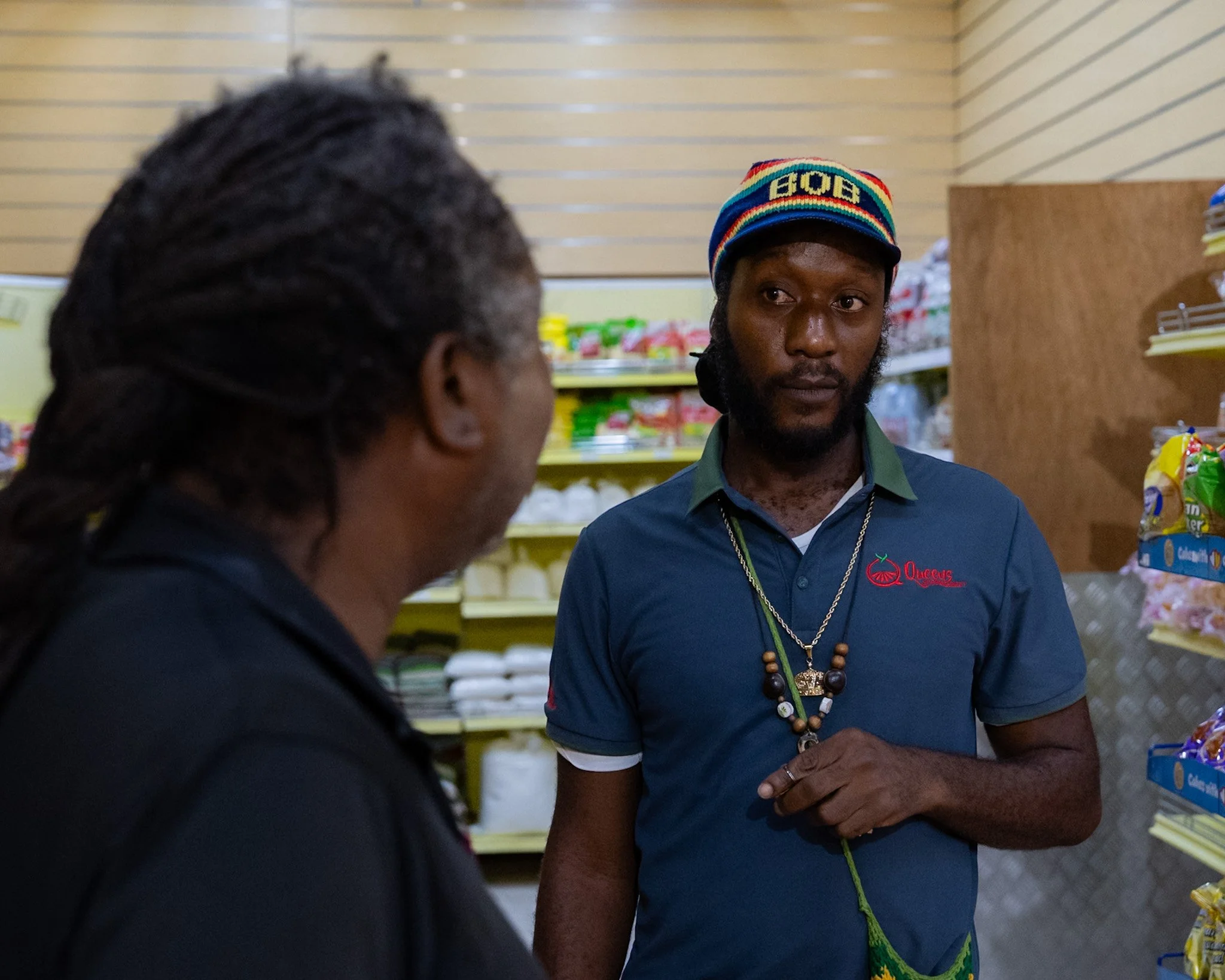
Daniel “Ras Daniel” Smith-Cooke (39), 2nd-generation Rastafari, Assistant Manager (supermarket), Treasurer, Rastafari Coral Gardens Benevolent Society. Jamaica, 2026.
“So the perception really changed. You have the Rasta culture and you have the Rastafari livity. The culture is widespread and accepted now, so everybody wants a little red, gold, and green, or you go to a Rasta party with a flag. Back in the days you could not even use a Rastafari phrase like ‘I and I’ in public, or grow your dreadlocks without issues. Now it is freer. I am an assistant manager with over 30 staff. I interact with doctors, lawyers, politicians, and police, and I do not have a problem. My boss told me he could give me the position and the pay, but he could not give me the respect, so I had to earn it. Within the first week, the staff gave me high praise and told me I was the best manager they could have. I think it is because I follow His Majesty’s teachings and lead by example. There is no work below me.”
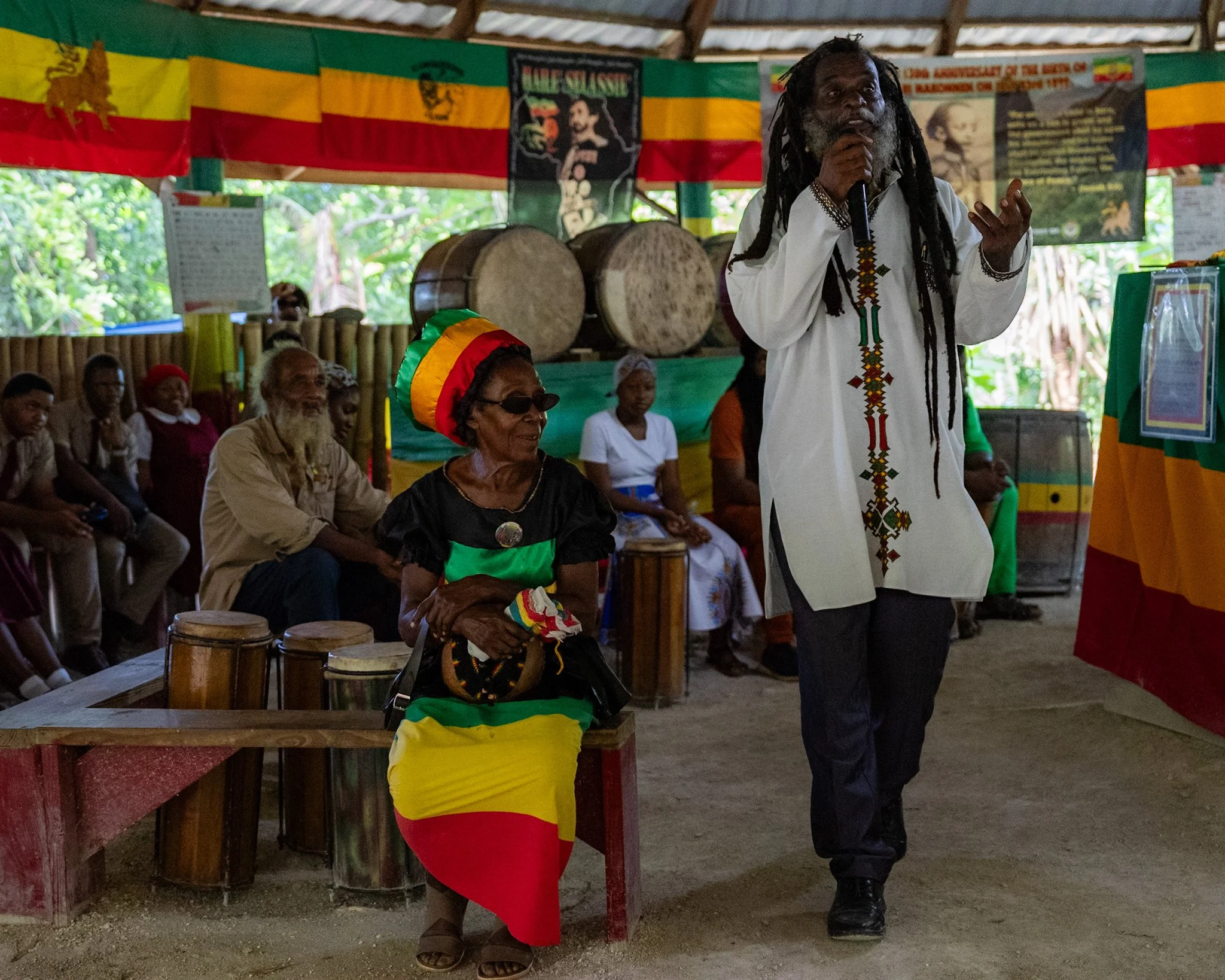
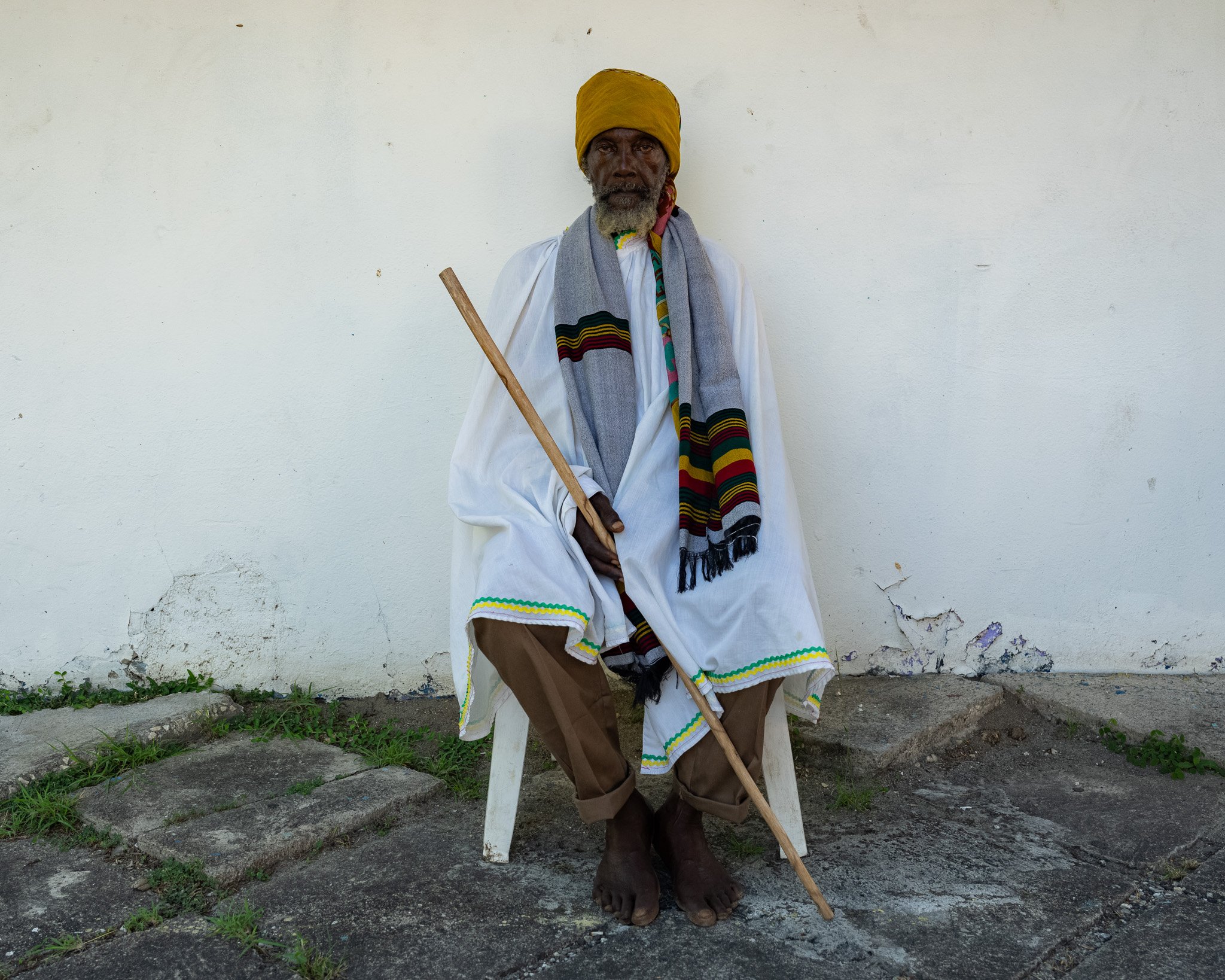
Donavan “Ras IVI” Wright (64), 1st-generation Rastafari, high priest and advocate. Jamaica, 2023.
“In Rastafari’s early years, the state marginalized us: no jobs, no tenancy, Rastafari children couldn’t go to school, and dreadlocks were deemed filthy. After years of advocacy, we have a united body that can dialogue with the government for rights and justice. Respectability toward Rastafari is better now, and the younger generation has more privileges than the elders. But the battle is still ongoing.”

Joseph “Ras Bongo Roach” Roach (72), 1st-generation Rastafari, herbalist. Jamaica, 2024.
“The stigma and barricades are still there. However, there is a better conception now as people are climatized and know the laws. During my time, you couldn’t go to school if you had dreadlocks. We had to lobby for our rights to equal education for Rastafari children to be allowed in schools. Now, Rastafari students attend universities.”
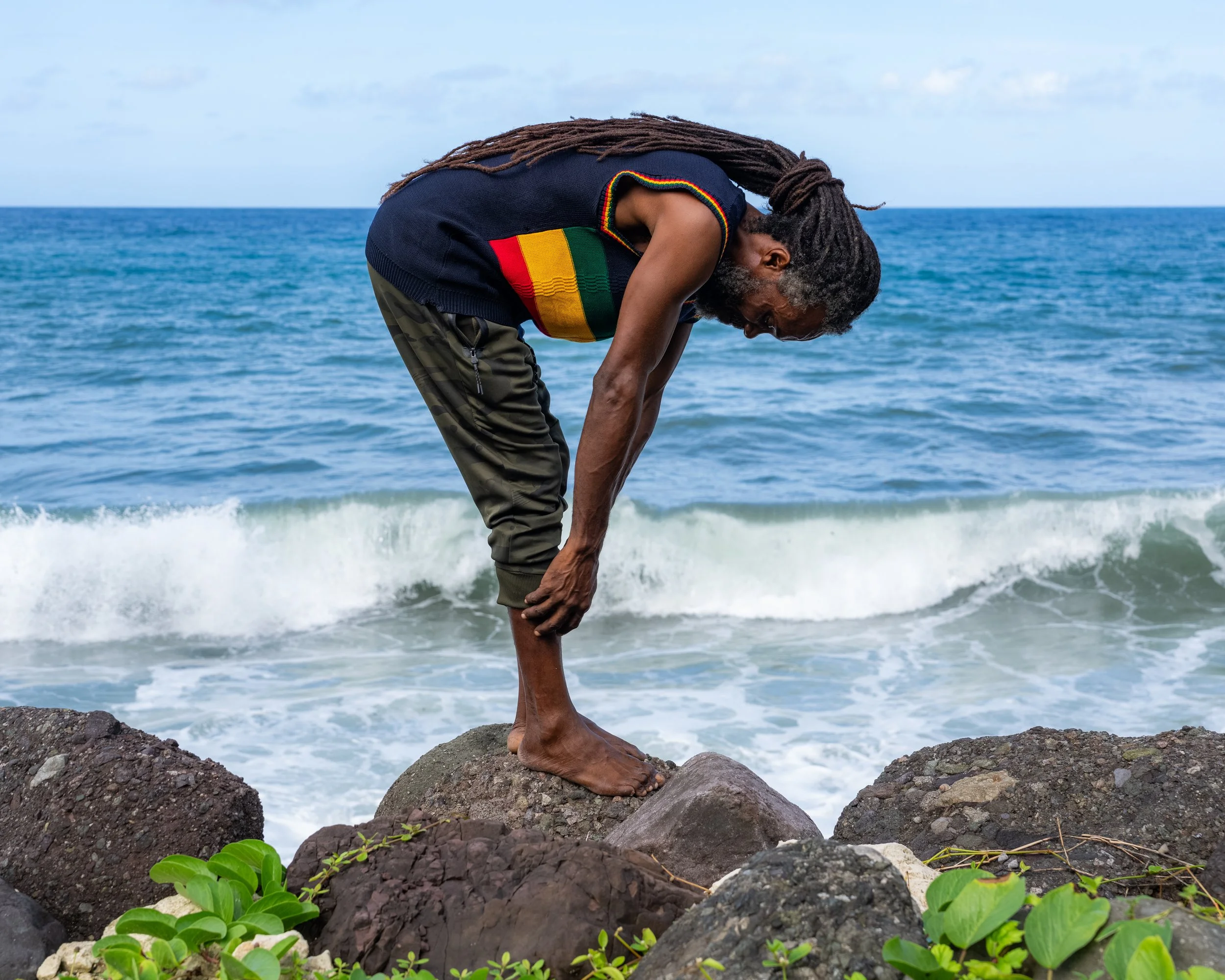
Joel “Ras Binghi Pele” Dyke (49), 3rd-generation Rastafari. Jamaica, 2024.
“As soon as we would make a mistake, the teacher would treat us differently. We would hear the name ‘one room child,’ ‘ganja smoking parents,’ and some things that hurt. Children would call us names such as ‘centipede in your head, lice in your dreadlocks.’ And even though the system told us we should wear the Rasta hat, the children would pull it off looking for lice and centipedes. It caused us to fight in anger and distracted us from focusing on learning, which the institution was supposed to allow us. It’s disturbing.”
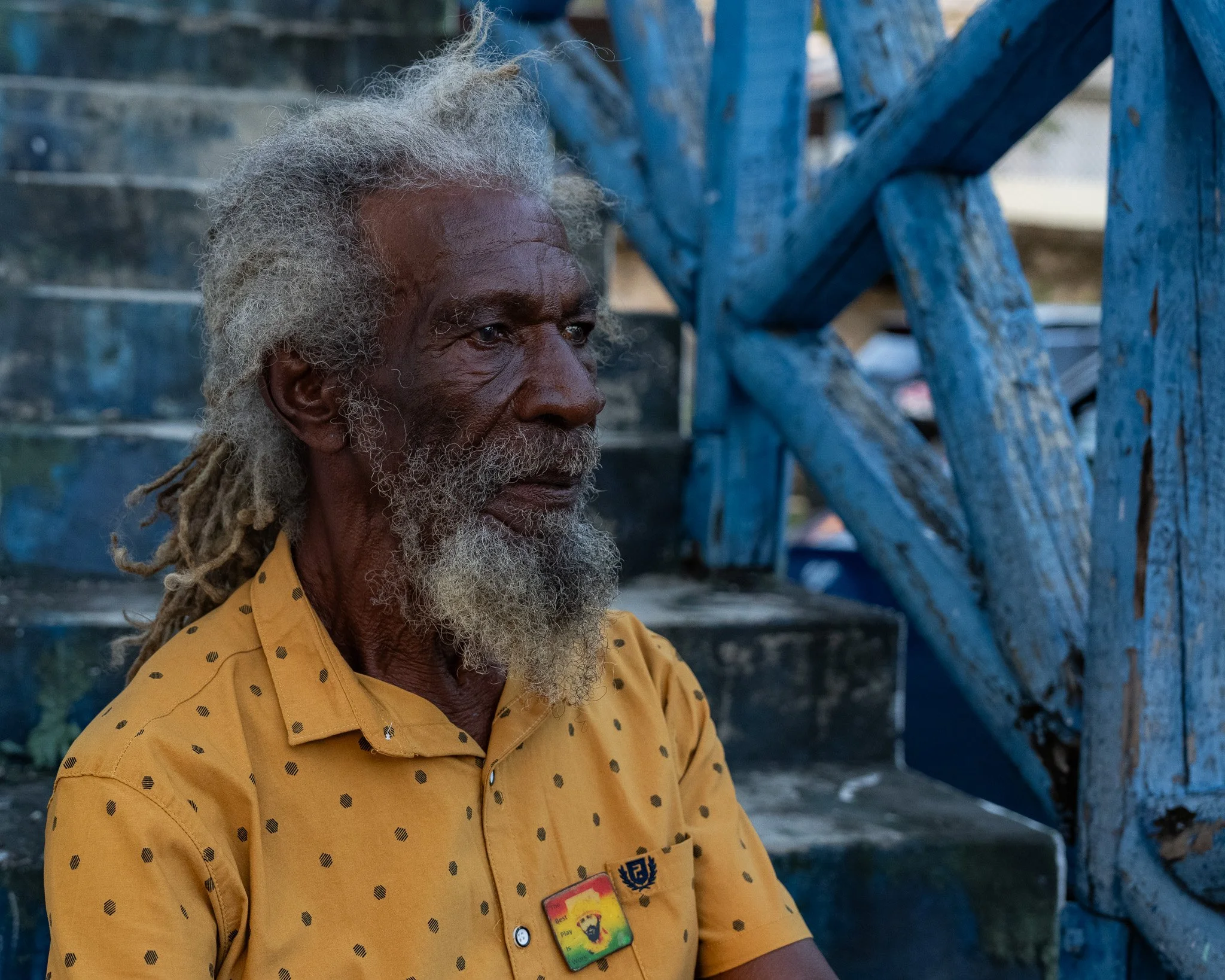
Orlando “Ras Walters” Walters (81), 1st-generation Rastafari, farmer and plant vendor. Jamaica, 2025.
“The current state of Rastafari is a little better. The police are not forcing us to cut our locs, which was one of the main issues in my days. And there was no employment for us, perhaps as garbage collectors. We had no choice but to pick up farming. We are the original farmers and still feed the nation. They can’t stop or fight us. They are trying to heed us, but I don’t see the freedom we should have.”
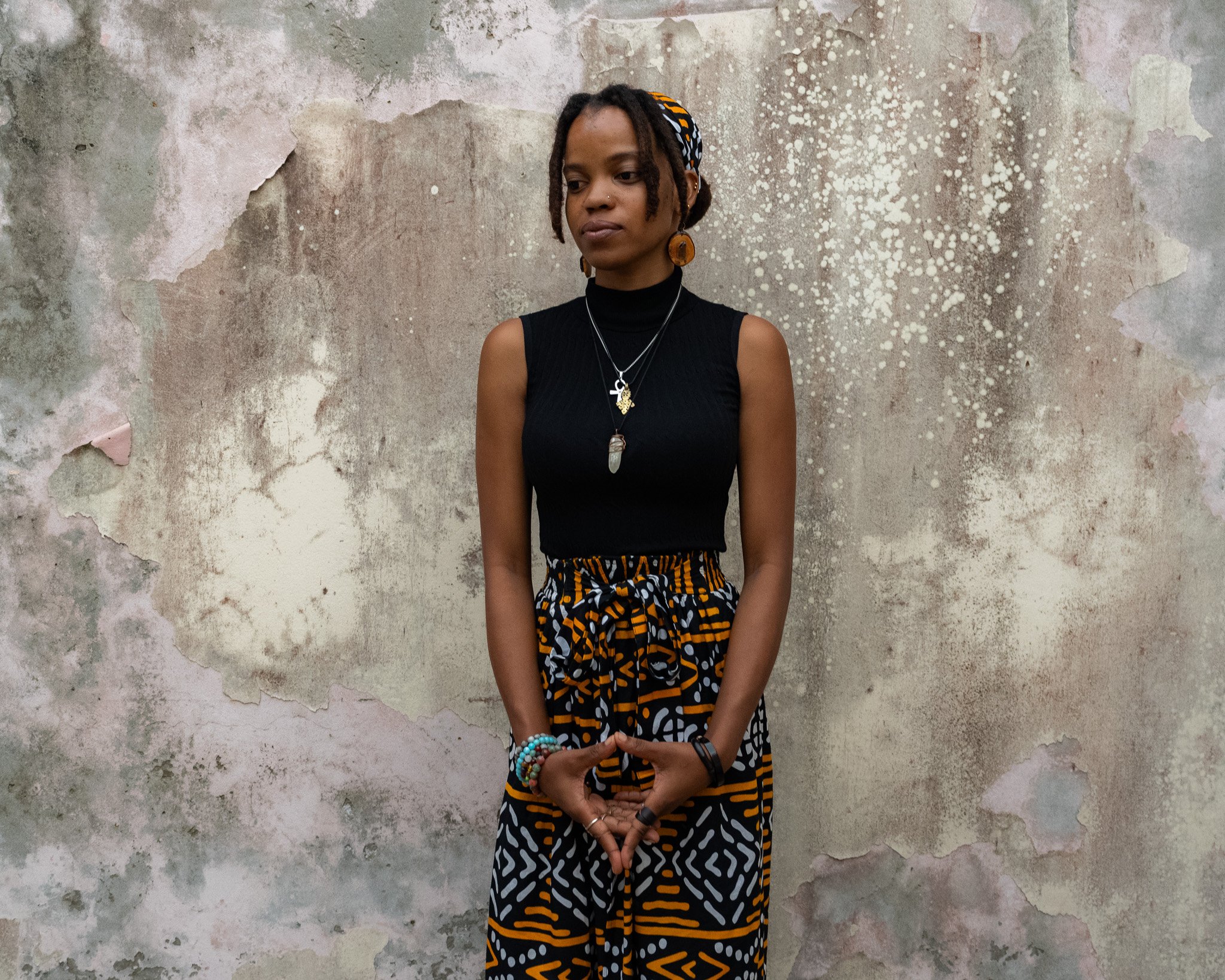
Iyandi Ion (27), 2nd-generation Rastafari. Jamaica, 2026.
“When I was in school, no one was interested in dreadlocks, but now I’m shocked to see high school students deciding to loc their hair at a young age and trying to eat healthy. In the past, people would run from Rastas and call them ‘blackheart man’ or ‘dirty foot Rasta.’ Now people greet Rastas on the street, but men still face discrimination, even in places like banks. Schools should teach Rastafari, the livity, and the perspective, along with African culture and our roots. That would help people understand Rasta youths and treat them differently.”
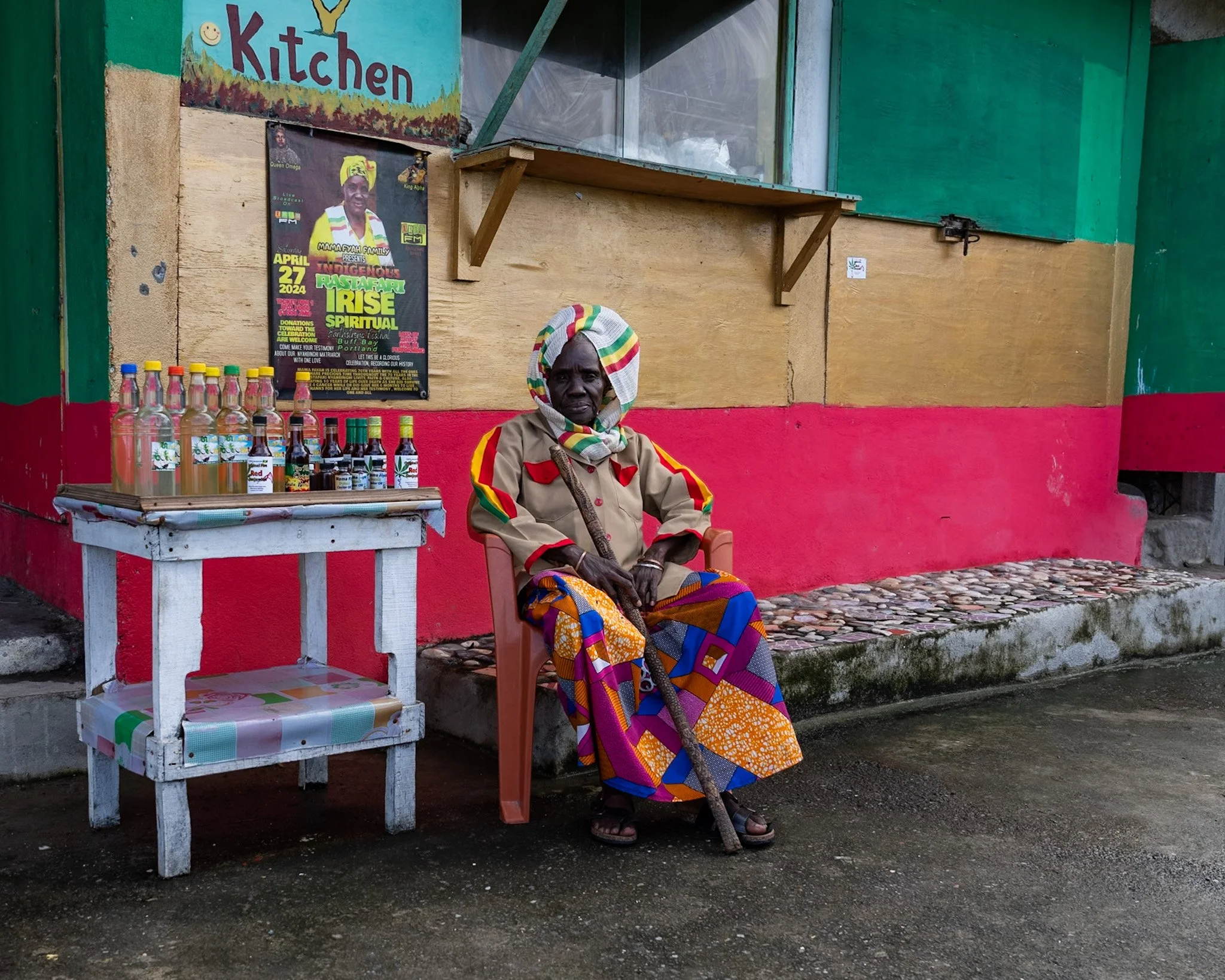
Pearline “Mama Fiyah” Wolfe (70), 2nd-generation Rastafari, spiritual leader. Jamaica, 2024 (died 2025).
“We should not let the system drag us down and tear us apart, because divide and rule is their plan. What affects one affects all, so if we want to escape it, we must unite. We also have to set examples for the younger generation. If we are not there to teach them, they will get hurt by the system, because they do not yet have the faith and humility that help us persist through tribulation. We must live to be an example so they have a foundation they can follow.”
Rastafari in Jamaica: Historical Context
The Rastafari movement took shape in Jamaica after the coronation of Ras Tafari Makonnen as Emperor Haile Selassie I of Ethiopia on November 2, 1930. Influenced by Marcus Garvey’s call to look to Africa for redemption, early followers believed Selassie’s rise fulfilled prophecy and signaled liberation.
By the 1950s, Rastafari were recognizable for dreadlocks and the red, gold, and green of the Ethiopian flag, and they adopted the Lion of Judah as a symbol of lineage and African identity. Leonard Percival Howell, a former member of Garvey’s Universal Negro Improvement Association, was among the earliest preachers. Beginning in the 1930s, Howell and other pioneers, including Robert Hinds, Joseph Hibbert, and Archibald Dunkley, preached Selassie’s divinity and rejected allegiance to the British crown. Authorities treated these messages as sedition, arrested leaders, and confined some to mental institutions.
State pressure intensified over the following decades. Police and soldiers attacked Rasta communes, destroyed homes, and arrested followers, often using marijuana laws as a pretext despite its sacramental role. Much of Jamaican society viewed Rastafari as pariahs, and newspapers described them as criminals, lazy, and unclean. Shut out of employment and formal institutions, many turned to farming for survival.
One such farmer, Benjamin “Rudolph” Franklyn, worked land on the Rose Hall estate in Montego Bay. After repeated disputes and raids, witnesses reported that a confrontation with police left him shot and badly injured. He was later arrested, imprisoned, and denied adequate medical care as his health deteriorated. He reportedly vowed revenge.
On April 11, 1963, Franklyn and five other men allegedly attacked and burned a gas station in the Coral Gardens area of the Rose Hall estate. Three civilians, including property manager Edward Fowler, were killed. Three Rastafari and two police officers also died before authorities regained control. Prime Minister Alexander Bustamante then issued the directive: “Bring in all Rastas, dead or alive.” Police, soldiers, and civilians formed search parties across western Jamaica. Men with dreadlocks or beards faced arrest, beatings, and forced hair-cutting, and in some cases death.
By the end of Good Friday, April 12, authorities had detained more than 150 Rastafari in raids across St. James, Hanover, Trelawny, and Westmoreland. The Rastafari community remembers Holy Thursday and Good Friday as “Bad Friday.” The episode is also referred to as the Coral Gardens incident or the Coral Gardens massacre.
In 2015, the Office of the Public Defender released an investigative report documenting the causes and aftermath, and called for a formal apology and redress for victims. In April 2017, Prime Minister Andrew Holness delivered an official apology in Parliament and announced measures including a trust fund for victims and families, efforts to identify surviving witnesses, and the designation of land for a future Rastafari heritage and cultural center.
Sixty-three years after the Coral Gardens incident, the Jamaican government handed over land titles to the Rastafari Coral Gardens Benevolent Society on April 3, 2026. Presented by Deputy Prime Minister Dr. Horace Chang, with Minister of Culture, Gender, Entertainment and Sport Olivia “Babsy” Grange in attendance, the handover marked a formal acknowledgment and a concrete step toward restitution for the Rastafari community.